Blogs
What is a Nasal Bone Fracture? Symptoms, Treatment and Recovery Explained

A nasal bone fracture is a break or crack in the small bones that form the bridge of the nose. A nasal bone fracture usually happens after a fall, sports injury, road accident or direct blow to the face.
Because the nose sits at the centre of the face, even a minor injury can cause swelling, bleeding and a visible change in shape. The condition can also affect breathing if the bones or nasal septum are displaced. This article explains symptoms, treatment choices and recovery from an ENT point of view so you know when to seek medical care.
If the injury is recent, do not try to push the nose back into place at home. Early evaluation by an ENT specialist helps prevent missed complications and improves the chance of a smooth recovery.
Why the Nasal Bones Fracture Easily
The nasal bones are thin and prominent. They protect the upper part of the nose but absorb much of the force when the face hits a hard surface.
A nasal bone fracture may happen during contact sports, two-wheeler accidents, workplace injuries, slips at home or physical assault. In children, the injury may look less obvious because their bones are still developing.
Not every swollen nose is fractured. However, persistent pain, crooked appearance or blocked breathing after trauma should be assessed. An ENT doctor looks beyond the visible bruise and checks the septum, airway and nearby facial structures.
Symptoms of a Nasal Bone Fracture
Common signs include:
-
Pain or tenderness over the bridge of the nose
-
Swelling that increases in the first 24 to 48 hours
-
Nosebleed soon after the injury
-
Bruising around the nose or under the eyes
-
A crooked or flattened nasal appearance
-
Difficulty breathing through one or both nostrils
-
A crunching feeling when the nose is touched
-
Headache or facial pain after the impact
A nasal bone fracture can also cause a septal haematoma, which is a collection of blood inside the nasal septum. This needs urgent treatment because it can damage cartilage and lead to a saddle-shaped deformity if ignored.
When is a Nose Injury an Emergency?
You should treat a suspected nasal bone fracture as urgent if there is heavy bleeding, severe pain, facial numbness, vision changes or symptoms of a head injury.
| Warning sign | What it may indicate | What to do |
|---|---|---|
| Bleeding that does not stop | Significant nasal injury | Go to emergency care |
| Clear fluid from the nose after head injury | Possible skull base injury | Seek immediate medical help |
| Severe headache, vomiting or fainting | Possible concussion | Visit an emergency department |
| Both nostrils blocked with swelling inside | Possible septal haematoma | Same-day ENT review |
| Vision changes or facial numbness | Injury beyond the nose | Urgent specialist assessment |
| Open wound or visible bone | Open fracture | Emergency treatment |
If you are searching for the best ENT hospital in Kerala after a nose injury, choose a centre that can assess both breathing and facial trauma. Ascent Hospital provides 24 hrs ENT emergency care and specialised evaluation for ear, nose, throat, head and neck conditions.
How Doctors Diagnose a Broken Nose
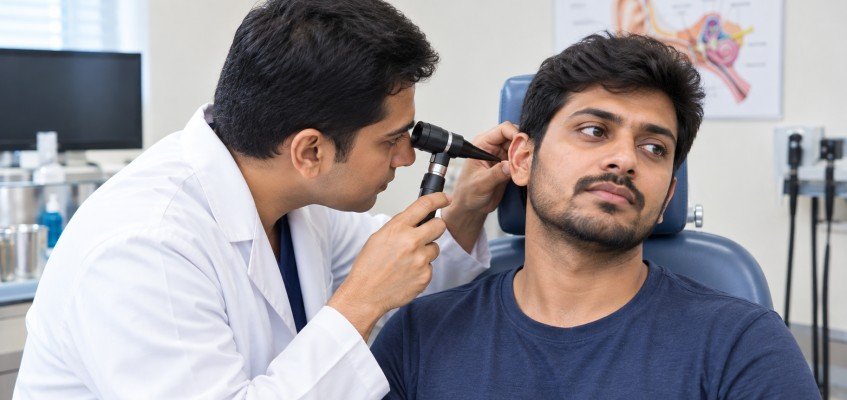
Diagnosis of a nasal bone fracture starts with a careful physical examination. The ENT specialist asks how the injury happened, checks tenderness and swelling, looks for deformity and assesses airflow through each nostril.
A nasal endoscopy may be done to examine the septum and internal nasal passage. X-rays are not always required for simple injuries. A CT scan may be advised if there is concern about complex facial trauma, eye socket injury or deeper structural damage.
At Ascent ENT Hospital, advanced diagnostic imaging supports ENT assessment when deeper facial injury is suspected. This helps doctors decide whether simple observation, closed realignment or surgery is the safest option.
Treatment Options for a Nasal Bone Fracture
Treatment depends on the severity of injury, timing of consultation, breathing difficulty and change in nasal shape. The main goal is to restore function, reduce deformity and prevent complications.
First aid before you see a doctor
For the first few hours after injury, basic care can reduce swelling and discomfort:
-
Sit upright and keep the head elevated
-
Apply a cold pack wrapped in cloth for 10 to 15 minutes at a time
-
Avoid pressing, twisting or straightening the nose
-
Do not blow the nose until a doctor says it is safe
-
Use pain medicine only as advised, especially if bleeding is present
-
Seek medical care if pain, swelling or blockage worsens
ENT treatment and realignment
For a simple nasal bone fracture with straight alignment, treatment may involve pain control, swelling management and follow-up. If the nose is displaced, an ENT specialist may recommend closed reduction, a procedure that gently realigns the bones without external cuts.
Closed reduction is often considered after swelling reduces, usually within 7 to 14 days in adults. Children may need earlier assessment because their bones heal faster. Delayed treatment can make realignment more difficult.
Severe injuries, old deformities or associated septal damage may require septoplasty, rhinoplasty or reconstructive surgery. If trauma has affected the nasal passages or sinuses, specialised Rhinology and Sinus Diseases treatment can help evaluate airway and sinus health. If long-standing sinus blockage is also present, an ENT doctor may separately assess whether Sinusitis Surgery is relevant after healing.
For injuries involving the throat, head, neck or wider facial structures, coordinated Ear Nose Throat Head And Neck department support may be needed.
Recovery Timeline After a Broken Nose
Recovery after a nasal bone fracture is usually gradual. Swelling often makes the injury look worse in the first few days, then slowly improves.
| Time after injury | What commonly happens | Care focus |
|---|---|---|
| First 24 to 48 hours | Pain, swelling and possible bleeding | Ice packs, rest and urgent review if warning signs appear |
| 3 to 7 days | Bruising may peak, pain often reduces | ENT assessment and monitoring of breathing |
| 7 to 14 days | Swelling reduces enough to judge shape | Closed reduction may be considered if displaced |
| 2 to 6 weeks | Bones continue healing | Avoid contact sports and protect the nose |
| After 6 weeks | Persistent blockage or deformity becomes clearer | Follow-up if breathing or appearance is affected |
Most people return to routine non-contact activities within a few days, depending on pain and swelling. Contact sports should be avoided until an ENT specialist confirms that healing is adequate.
How to Support Healing at Home
During nasal bone fracture recovery, protect the nose from repeat injury. Sleep with the head raised for the first few nights and avoid resting the face against a pillow.
Do not blow the nose forcefully. If you need to sneeze, keep the mouth open to reduce pressure. Avoid heavy lifting, strenuous workouts and activities that raise nasal pressure until your doctor approves.
If you wear spectacles, ask your doctor whether they are safe to use during early healing. Pressure on the bridge of the nose may cause discomfort or affect alignment in some cases.
Complete all prescribed medicines. Do not self-start antibiotics or nasal sprays unless advised by a doctor. If breathing becomes worse after initial improvement, return for review.
Why Choose Ascent Hospital for ENT Care?
Even a mild nasal bone fracture can leave long-term nasal blockage, repeated sinus trouble or visible deviation if healing is not guided properly. Timely ENT care is especially important when swelling hides the true shape of the injury.
Ascent Hospital is Kerala’s first ISO and NABH accredited ENT specialty hospital, offering comprehensive ear, nose, throat, head and neck care. Patients searching for the best ENT clinic in Kerala choose Ascent ENT Hospital Kerala for expert doctors, advanced technology and emergency ENT support.
People looking for the best ENT surgeon in Kerala can benefit from early specialist assessment, especially when breathing, facial appearance or septal health is affected.
Get Timely ENT Care
A nasal bone fracture is common, but it should not be ignored. The key signs are pain, swelling, bleeding, bruising, blocked breathing and a change in nasal shape. Early ENT evaluation helps identify complications and gives the best chance of restoring both appearance and airflow.
If you or a family member has suffered a nose injury, do not wait for symptoms to worsen. Schedule a consultation with Ascent Hospital for expert ENT assessment and timely care in Kerala.
Frequently Asked Questions
Can a nasal bone fracture heal on its own?
Some minor injuries can heal without realignment if the nose remains straight and breathing is normal. However, an ENT check is important to rule out septal haematoma, displacement or hidden airway problems.
How soon should I see a doctor after a nose injury?
Ideally, see an ENT specialist within the first few days. Seek immediate care if bleeding is heavy, both nostrils are blocked, vision changes occur or there are signs of head injury.
Will every broken nose need surgery?
No. Many cases need only observation, pain relief and follow-up. Surgery or closed realignment is considered when the nose is displaced, breathing is affected or deformity is likely.
How long does recovery take?
Swelling and bruising often improve in 1 to 2 weeks. Bone healing usually takes several weeks, so contact sports and facial impact should be avoided until medical clearance.
Can an untreated broken nose cause breathing problems later?
Yes. Untreated displacement or septal injury can lead to chronic nasal blockage, snoring, recurrent sinus symptoms or a visible bend in the nose.
Share

Our Professionals
 (1) (2).png)
Dr. Sharafudheen. P.K
Chief Consultant ENT & Cochlear Implant Surgeon
MBBS, MS (ENT), DORL DOHNS - RCS Ed (UK)
 (2).jpg)
Dr. Anuradha Varma. M.R
Senior Consultant ENT, Head & Neck Surgeon
MBBS, DLO
.jpeg)
Dr. Bijiraj Vathwam Veettil
Senior Consultant ENT Head & Neck, Sleep Surgeon
MBBS, MS (ENT), Fellowship in Snoring and Sleep apnea Surgeries (Singapore), Fellowship in sinus and skull base surgery
.png)
Dr. Prasanth Parameswaran
Senior Consultant ENT, Head & Neck Surgeon
MBBS, DLO, DNB (ENT), MNAMS, AASC (Specialist - Allergy and Immunotherapy), Fellowship in Snoring and Sleep apnea Surgeries (Singapore).

Dr. Arshad M Razi
Consultant ENT, Head & Neck Surgeon
MBBS, MS (ENT), Fellow in Head & Neck Surgical Oncology

Dr. Deepthi. N.V
Senior Consultant ENT, Head & Neck Surgeon
MBBS, DNB (ENT)


Dr. K Shilpa Nair
ENT Surgeon | Cochlear Implant & Sleep Surgery Specialist
MBBS, MS, DNB, MRCS(Eng), Post doctoral Fellowship in Implantation Otology


Dr. Nibi Shajahan
Consultant ENT, Head & Neck Surgeon
MBBS, MS (ENT), Fellowship in Snoring and Sleep apnea Surgeries (Singapore). Trained in Allergy and Immunotherapy




Dr.Anand Krishnan
Consultant ENT, Head and Neck Surgeon
MBBS ,DLO ,DNB ENT ,MRCS (ENGLAND)




Dr. Seshadri Ganesh. A.L
Senior Consultant Anaesthesiologist
MBBS, DCH, MD, DIP.N.B




Mr. Prasanth. N.P
Senior Audiologist & Speech Language Pathologist
BASLP, MASLP, MSc (Psy)

Ms. Chinju Johny
Audiologist & Speech Language Pathologist
BASLP, MSc (Audiology)



Our Patient Stories
View All Testimonials