Blogs
What is a Lingual Thyroid? Causes, Symptoms and Treatment
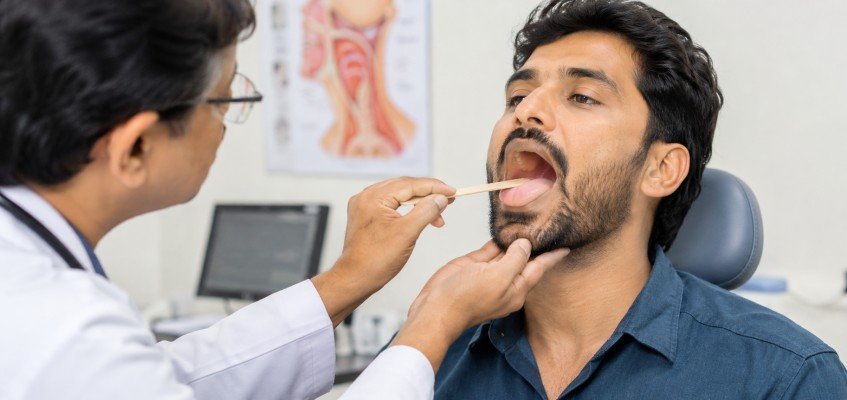
A lingual thyroid is a rare developmental condition in which thyroid tissue stays at the base of the tongue instead of moving down to its normal position in the front of the neck. It forms when the thyroid gland fails to migrate from the foramen cecum along the thyroglossal duct during weeks 3 to 7 of fetal development.
This ectopic thyroid tissue is the most common form of misplaced thyroid tissue, affecting roughly 1 in 10,000 to 100,000 people, with a strong female predominance of about 7:1. For patients seen at Ascent Hospital, the condition often surfaces as an incidental finding during a routine throat examination, though some people develop noticeable symptoms that need active care.
What a Lingual Thyroid Actually Looks Like and Feels Like
The tissue appears as a smooth, pink or reddish mass at the back of the tongue, usually near the foramen cecum. Many people never know they have it. When symptoms do appear, they tend to include dysphagia (difficulty swallowing), dysphonia (voice changes or hoarseness), a persistent sensation of a lump in the throat or in more serious cases airway obstruction.
Up to 70% of people with a lingual thyroid are hypothyroid because the lingual tissue may be the only functioning thyroid tissue they have. That hormonal shortfall can produce effects far beyond the neck, including fatigue, cold intolerance, weight gain and in young people, delayed growth and puberty.
How Doctors Diagnose a Lingual Thyroid
Diagnosis usually starts with thyroid function tests to check whether the tissue is producing enough hormone. A neck ultrasound confirms whether normal thyroid tissue exists in its usual location. CT or MRI can define the size and position of the lingual mass. The most definitive test is a radionuclide thyroid scan using technetium-99m, which shows uptake at the tongue base and confirms that the mass is functioning thyroid tissue.
A critical warning applies here. Before any removal is considered, doctors must verify whether normal thyroid tissue exists elsewhere in the neck. Removing a lingual thyroid blindly can leave a patient with no thyroid function at all, requiring lifelong hormone replacement.
Treatment Options for Lingual Thyroid and When Each Makes Sense
| Situation | Recommended Approach |
|---|---|
| Asymptomatic with normal thyroid function | Regular monitoring only |
| Hypothyroid with mild symptoms | Levothyroxine, which can also shrink the mass |
| Severe swallowing or airway obstruction | Surgery or radioiodine ablation |
| No thyroid tissue elsewhere in neck | Preserve lingual tissue; treat medically |
Levothyroxine serves two purposes in many cases: it corrects hypothyroidism and can reduce the size of the lingual mass through TSH suppression. Surgery is reserved for significant obstruction and radioiodine ablation is an option for selected patients who are not surgical candidates.
Related Thyroid Concerns People Often Ask About
Thyroid problems can show up in the mouth and throat in ways that overlap with lingual thyroid symptoms. A swollen tongue, scalloped edges on the tongue or a persistent sore throat can sometimes point to thyroid dysfunction, though these signs are not specific. The question Can Thyroid Cause Throat Pain? is common in clinical practice and the answer is yes in some cases, usually from thyroid inflammation, a large goitre pressing on nearby structures or an ectopic mass like a lingual thyroid.
People also ask about exercise and diet. Low-impact aerobic activity and strength training are generally well tolerated for thyroid patients, but intense exercise can worsen fatigue when hormone levels are not yet stabilised. As for food, a balanced diet with adequate iodine, selenium and zinc supports thyroid function, while excessive raw goitrogens from large amounts of soy or cruciferous vegetables can interfere with iodine uptake in susceptible individuals.
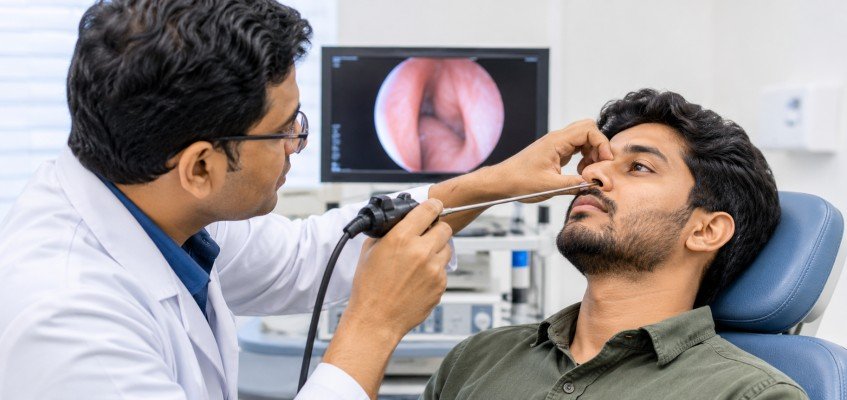
For anyone with persistent throat symptoms, voice changes or unexplained growth delay, an evaluation by an ENT clinic in Kerala can clarify whether the cause is structural, hormonal, or both. Facilities offering Ear Nose Throat Head and Neck Surgery services can perform the necessary endoscopy and coordinate thyroid testing. ENT Throat Endoscopy is particularly useful for directly visualising a lingual mass and ruling out other base-of-tongue lesions.
Lingual Thyroid: Practical Advice for Patients and Families
If a lingual thyroid is found incidentally, the most important step is checking thyroid function and confirming whether normal neck thyroid tissue exists. Do not rush into removal. Many people live with a lingual thyroid without ever needing surgery and medical therapy often resolves both the hormonal and compressive symptoms.
For parents, unexplained slow growth, delayed puberty or persistent fatigue in a teenager should prompt a thyroid evaluation, especially if there is any history of a tongue-base mass. It’s treatable if the correct diagnosis is made.
If you or a family member has a tongue-base mass, swallowing difficulty or unexplained thyroid symptoms, schedule a consultation with Ascent ENT hospital Kerala.
You can rely on Ascent ENT hospital Perinthalmanna for a complete evaluation and a clear treatment plan. You can also visit Ascent ENT Hospital in Calicut or Ascent ENT hospital Palakkad for expert care.
Book your consultation with us now for expert evaluation and personalised treatment for lingual thyroid.
Frequently Asked Questions
1. What does your tongue look like if you have thyroid issues?
The tongue may appear enlarged, scalloped along the edges or pale and in the lingual thyroid there is a visible mass at the base of the tongue.
2. What is the best type of exercise for thyroid patients?
Low-impact aerobic exercise such as walking, swimming or cycling combined with light strength training is usually well tolerated once thyroid hormone levels are stable.
3. What are hypothyroid legs?
Hypothyroid legs refers to leg swelling, muscle stiffness, cramps or a heavy feeling in the legs caused by low thyroid hormone levels.
4. What foods should I eat and avoid if I have thyroid problems?
Eat foods rich in iodine, selenium and zinc such as fish, eggs and nuts. Avoid excessive raw soy or large amounts of raw cruciferous vegetables that can interfere with thyroid function.
5. Is lingual thyroid dangerous?
It can be dangerous if it causes airway obstruction or if it is the only thyroid tissue and becomes hypothyroid. But many cases remain asymptomatic and need only monitoring.
Share
 (1) (2).png)

Our Professionals
Dr. Sharafudheen. P.K
Chief Consultant ENT & Cochlear Implant Surgeon
MBBS, MS (ENT), DORL DOHNS - RCS Ed (UK)
 (2).jpg)
Dr. Anuradha Varma. M.R
Senior Consultant ENT, Head & Neck Surgeon
MBBS, DLO
.jpeg)
Dr. Bijiraj Vathwam Veettil
Senior Consultant ENT Head & Neck, Sleep Surgeon
MBBS, MS (ENT), Fellowship in Snoring and Sleep apnea Surgeries (Singapore), Fellowship in sinus and skull base surgery
.png)
Dr. Prasanth Parameswaran
Senior Consultant ENT, Head & Neck Surgeon
MBBS, DLO, DNB (ENT), MNAMS, AASC (Specialist - Allergy and Immunotherapy), Fellowship in Snoring and Sleep apnea Surgeries (Singapore).

Dr. Arshad M Razi
Consultant ENT, Head & Neck Surgeon
MBBS, MS (ENT), Fellow in Head & Neck Surgical Oncology

Dr. Deepthi. N.V
Senior Consultant ENT, Head & Neck Surgeon
MBBS, DNB (ENT)

Dr. K Shilpa Nair
ENT Surgeon | Cochlear Implant & Sleep Surgery Specialist
MBBS, MS, DNB, MRCS(Eng), Post doctoral Fellowship in Implantation Otology


Dr. Nibi Shajahan
Consultant ENT, Head & Neck Surgeon
MBBS, MS (ENT), Fellowship in Snoring and Sleep apnea Surgeries (Singapore). Trained in Allergy and Immunotherapy



Dr.Anand Krishnan
Consultant ENT, Head and Neck Surgeon
MBBS ,DLO ,DNB ENT ,MRCS (ENGLAND)




Dr. Seshadri Ganesh. A.L
Senior Consultant Anaesthesiologist
MBBS, DCH, MD, DIP.N.B




Mr. Prasanth. N.P
Senior Audiologist & Speech Language Pathologist
BASLP, MASLP, MSc (Psy)

Ms. Chinju Johny
Audiologist & Speech Language Pathologist
BASLP, MSc (Audiology)



Our Patient Stories
View All Testimonials