Blogs
What is a Chevallet Fracture? Symptoms, Causes and Treatment
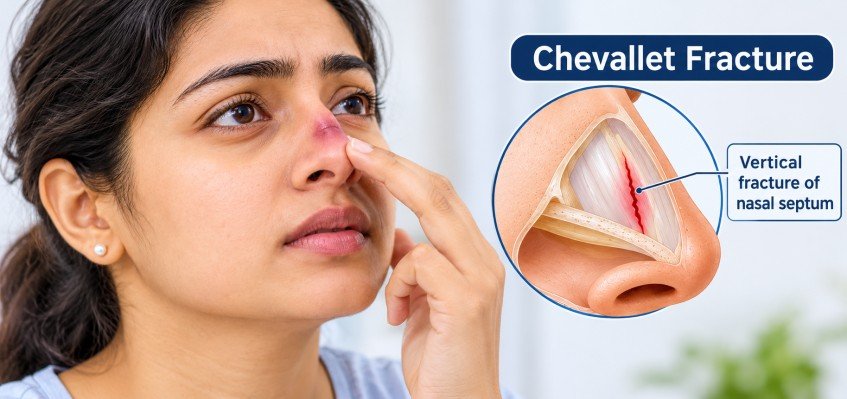
A Chevallet fracture is a vertical fracture of the nasal septum caused by a direct upward blow to the nose. The injury splits the cartilaginous or bony septum vertically, often extending toward the perpendicular plate of the ethmoid.
This matters because the septum supports the nasal bridge and regulates airflow. When it cracks vertically, breathing can change even if the outside of the nose looks normal. The ENT doctor in Kerala often sees this injury after falls, contact sports or dashboard impacts where force travels from below. At Ascent ENT Hospital, patients can seek expert evaluation and treatment for nasal injuries.
Here, this article explains how the fracture happens, what it feels like, when to seek care and what treatment involves.
Chevallet Fracture in Plain Terms
Most nasal fractures break the nasal bones across the bridge. A Chevallet fracture is different. Force comes from underneath, like a knee to the face or a fall onto an upward-angled edge and travels vertically through the septum. The split can involve cartilage alone or extend into the ethmoid bone higher up.
Clinicians link this pattern with Class I nasal bone fractures and septal instability. The septum may stay in place initially but loses stiffness. Over days or weeks, the nose can drift or one side may feel permanently blocked.
How the Chevallet Fracture Happens
A direct blow from below pushes the nasal tip upward, compressing the septum lengthwise. Because the septum is thin and rigid, it cracks vertically rather than absorbing the force.
Common scenarios:
-
A fall onto the edge of a table, step or handlebar
-
A knee or elbow striking the underside of the nose during sport
-
A dashboard or airbag impact where the head tilts back and the nose takes an upward hit
-
An animal head-butt or similar low-angle collision
A direct impact from the front more often causes a transverse or comminuted nasal bone fracture. The vertical septal split is the clue that force came from below.
Symptoms That Point to a Septal Fracture
A Chevallet fracture can be easy to miss early. Swelling masks movement and the outside may show little bruising. Symptoms that should raise suspicion:
-
A cracking sensation at impact
-
Immediate nosebleed, sometimes brief
-
A feeling of looseness or clicking inside the nose
-
One-sided blockage that does not improve as swelling settles
-
A visible shift of the nasal tip or columella after a few days
-
Clear fluid draining from one nostril, which needs urgent evaluation
A septal hematoma is the red flag that changes management. If blood collects between the septal cartilage and its lining, the cartilage can lose blood supply. This requires drainage within hours, not days.
When to See an ENT Specialist
Any blow strong enough to crack the septum deserves examination. Timing matters because closed reduction works best before bones set, typically within one to two weeks in adults. Children may need assessment sooner.
An ENT specialist in Kerala can examine the septum directly with a nasal endoscope. This shows the fracture line, any hematoma and whether the perpendicular plate of the ethmoid is involved. Plain X-rays are less useful for septal fractures than clinical exams and endoscopy. A CT scan is reserved for complex injuries, suspected skull base involvement or possible cerebrospinal fluid leak.
Treatment Options for Chevallet Fracture
Closed Reduction
Most Chevallet fractures are managed with closed reduction. The surgeon uses instruments such as Ash forceps or Walsham forceps to lift and realign the septum without opening the nose. Ash forceps grip the septum directly, while Walsham forceps elevate depressed nasal bones. The procedure is usually done under local or general anaesthesia.
After reduction, the nose is packed or splinted briefly. The goal is to restore the septum to midline so it heals straight and keeps both airways open.
Open Reduction and Septoplasty
If the fracture is comminuted, badly displaced or seen late, closed reduction may not hold. Open reduction allows direct fixation. In some cases, a septoplasty is done at the same time to correct a pre-existing deviation or remove fragments that would block breathing.
Observation
A small, stable, non-displaced septal fracture with no breathing problem may be observed. The patient still needs follow-up because late deviation can appear as swelling resolves.
Chevallet Fracture vs Other Nasal Injuries
| Feature | Chevallet Fracture | Typical Nasal Bone Fracture |
|---|---|---|
| Force direction | From below, upward | Straight-on or lateral |
| Main structure injured | Nasal septum | Nasal bones |
| External bruising | Often minimal | Usually obvious |
| Breathing change | Common, one-sided | Variable |
| Reduction approach | Ash forceps or open septoplasty | Walsham forceps elevation |
| Late complication | Septal deviation, saddle nose | Dorsal hump, asymmetry |
Recovery After Chevallet Fracture and Common Mistakes
Recovery after closed reduction is measured in weeks. The nose may feel congested while internal swelling settles. Patients should avoid blowing the nose, heavy lifting and contact sports for several weeks. Glasses may need to rest on the forehead rather than the nasal bridge until bones are stable.
One common mistake is waiting too long. A patient who assumes the nose will straighten itself may miss the window for closed reduction. Another is ignoring a septal hematoma. The pain and blockage may seem minor, but untreated hematoma can lead to septal perforation or saddle nose deformity. A third mistake is returning to sport too early. A second low-angle impact on a healing septum can displace it further.
What the Research and Current Practice Say
The link between upward force and vertical septal fracture is well established in trauma literature. Current best practice is early ENT assessment, endoscopic evaluation and closed reduction where displacement or airway obstruction is present. The role of routine antibiotics after nasal packing is still debated and practice varies. What is not debated is that septal hematoma is a surgical emergency.
For patients near Malappuram, Ascent ENT hospital Perinthalmanna offers evaluation and management of nasal trauma, including septal fractures. The hospital’s ENT surgeons handle both fresh injuries and late deformities from poorly healed fractures. Patients from northern Kerala can access similar care through Ascent ENT hospital in Calicut or Ascent ENT hospital Palakkad also. The clinical approach is the same: examine early, drain any hematoma and reduce the fracture before it sets.
Final Thoughts on Chevallet Fracture Treatment
A suspected Chevallet fracture should be assessed within 24 to 48 hours if there is severe pain, a swollen bluish bulge inside the nostril, clear nasal drainage or visible deformity. If the nose is simply sore and blocked after an upward blow, an appointment within a few days is still wise. The window for closed reduction is short and the septum heals quickly.
For persistent nasal obstruction, a changing nasal shape or recurrent sinus issues after an old injury, a consultation with the best ENT surgeon in Kerala can clarify whether a septoplasty or open reduction is appropriate. The best ENT hospital in Kerala will combine endoscopic assessment with surgical options suited to the fracture pattern.
Schedule your consultation with Ascent ENT hospital early if you have had an upward blow to the nose, especially if breathing has changed or the nose looks different.
Share
 (1) (2).png)

Our Professionals
Dr. Sharafudheen. P.K
Chief Consultant ENT & Cochlear Implant Surgeon
MBBS, MS (ENT), DORL DOHNS - RCS Ed (UK)
 (2).jpg)
Dr. Anuradha Varma. M.R
Senior Consultant ENT, Head & Neck Surgeon
MBBS, DLO
.jpeg)
Dr. Bijiraj Vathwam Veettil
Senior Consultant ENT Head & Neck, Sleep Surgeon
MBBS, MS (ENT), Fellowship in Snoring and Sleep apnea Surgeries (Singapore), Fellowship in sinus and skull base surgery
.png)
Dr. Prasanth Parameswaran
Senior Consultant ENT, Head & Neck Surgeon
MBBS, DLO, DNB (ENT), MNAMS, AASC (Specialist - Allergy and Immunotherapy), Fellowship in Snoring and Sleep apnea Surgeries (Singapore).

Dr. Arshad M Razi
Consultant ENT, Head & Neck Surgeon
MBBS, MS (ENT), Fellow in Head & Neck Surgical Oncology

Dr. Deepthi. N.V
Senior Consultant ENT, Head & Neck Surgeon
MBBS, DNB (ENT)


Dr. K Shilpa Nair
ENT Surgeon | Cochlear Implant & Sleep Surgery Specialist
MBBS, MS, DNB, MRCS(Eng), Post doctoral Fellowship in Implantation Otology


Dr. Nibi Shajahan
Consultant ENT, Head & Neck Surgeon
MBBS, MS (ENT), Fellowship in Snoring and Sleep apnea Surgeries (Singapore). Trained in Allergy and Immunotherapy



Dr.Anand Krishnan
Consultant ENT, Head and Neck Surgeon
MBBS ,DLO ,DNB ENT ,MRCS (ENGLAND)




Dr. Seshadri Ganesh. A.L
Senior Consultant Anaesthesiologist
MBBS, DCH, MD, DIP.N.B




Mr. Prasanth. N.P
Senior Audiologist & Speech Language Pathologist
BASLP, MASLP, MSc (Psy)

Ms. Chinju Johny
Audiologist & Speech Language Pathologist
BASLP, MSc (Audiology)



Our Patient Stories
View All Testimonials