Blogs
Are Glomus Tumors Cancerous? Symptoms, Diagnosis & Treatment Explained
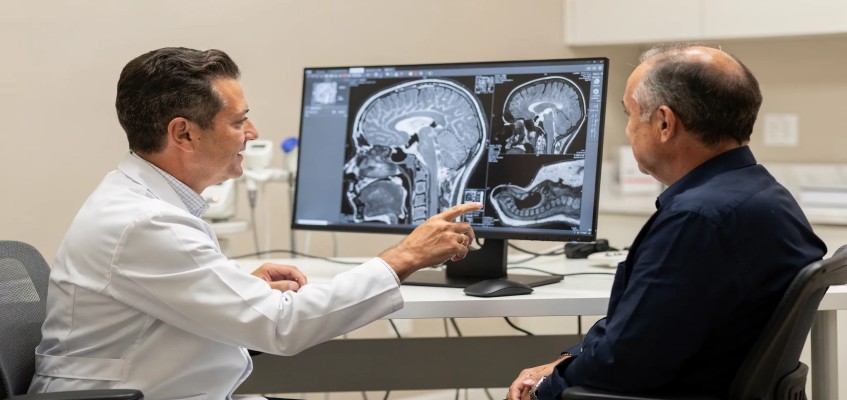
Are glomus tumors cancerous is a common concern when someone is told they have a glomus tumor in the ear or neck. In simple terms, most glomus tumors are non-cancerous growths that tend to grow slowly.
If you are searching are glomus tumors cancerous, the important detail is that “cancerous” is not decided by how they look alone but by whether they spread to other parts of the body. This article explains what glomus tumors are, the symptoms people notice first, how ENT specialists confirm the diagnosis and the treatment options used today.
What exactly is a glomus tumor?
Glomus tumors in the head and neck are more accurately called paragangliomas. They arise from small clusters of cells located near blood vessels and nerves. In ENT practice, they are commonly found around the middle ear, the jugular bulb area at the skull base, the vagus nerve in the neck or the carotid artery region.
Because these tumors are usually very vascular, they can cause symptoms like pulsating noise in the ear or visible reddish mass behind the eardrum. Even when they are not cancer, their location can make them serious because they may affect hearing, balance or nearby cranial nerves.
Are glomus tumors cancerous or benign in most patients?
In most patients, the answer to are glomus tumors cancerous is no. The majority are benign and do not spread to distant organs.
That said, a small percentage can be malignant. For paragangliomas, malignancy is typically defined by metastasis (spread to lymph nodes, bone, liver or lung) rather than by biopsy appearance alone. This is why imaging, staging and follow-up are so important.
If glomus tumors are cancerous, how often does it spread?
There is no single number that fits every subtype and location. Malignant behaviour is considered uncommon in head and neck paragangliomas overall. Your individual risk depends on factors like tumor site, size, growth pattern, nerve involvement, family history and in some cases genetic mutations.
If you or a family member has had paragangliomas, your ENT specialist may recommend genetic counselling or testing because some hereditary syndromes increase the chance of multiple tumors.
What symptoms do glomus tumors cause?
Symptoms depend on where the tumor sits and which structures it touches.
Common ear related symptoms
Many people start searching are glomus tumors cancerous after noticing symptoms such as:
-
Pulsatile tinnitus (a heartbeat like sound in the ear)
-
Hearing loss (often conductive hearing loss)
-
Ear fullness or ear pain
-
Dizziness or balance issues in some cases
Neck and nerve related symptoms
When located in the neck or skull base, symptoms may include:
-
A slow growing neck lump
-
Hoarseness or voice change
-
Difficulty swallowing
-
Shoulder weakness
-
Tongue weakness
These nerve related symptoms can occur even when the tumor is benign, simply because of pressure on cranial nerves.
When should you seek urgent ENT care?
While glomus tumors are usually slow growing, you should seek urgent evaluation if you have:
-
Sudden worsening hearing loss
-
New facial weakness
-
Severe vertigo with vomiting
-
Bleeding from the ear
-
Breathing difficulty or rapidly worsening swallowing problems
If you need fast assessment, an ENT centre with round the clock emergency support can help triage symptoms and arrange imaging. Ascent Hospital is known as a best ENT Hospital in Kerala with comprehensive ENT services, including emergency care when needed. You can learn more about Ascent Hospital and its specialty ENT care.
How do doctors diagnose a glomus tumor?
If your main question is are glomus tumors cancerous, the next step is confirming what type of tumor it is and mapping its exact extent.
ENT specialists typically use a combination of:
Clinical ENT examination
-
Otoscopy or microscopic ear exam to look for a reddish pulsatile mass behind the eardrum
-
Cranial nerve evaluation (voice, swallowing, tongue movement, facial function)
-
Hearing tests such as pure tone audiometry
Imaging tests
-
MRI with contrast is commonly used to define soft tissue extent
-
CT scan helps evaluate bone involvement in the ear and skull base
-
Angiography may be advised in selected cases to understand blood supply and plan embolisation
Additional tests in selected patients
Some paragangliomas can produce hormones (catecholamines) though this is more common in other body locations. If symptoms suggest this, your doctor may order blood or urine tests.
Glomus tumor types and what patients often notice
| Common name | Typical location | What patients often notice | Usual next step |
|---|---|---|---|
| Glomus tympanicum | Middle ear | Pulsatile tinnitus, hearing loss | Otoscopy, audiology, MRI or CT |
| Glomus jugulare | Jugular bulb area (skull base) | Pulsatile tinnitus, hearing loss, possible nerve symptoms | MRI or CT, nerve assessment, multidisciplinary planning |
| Glomus vagale | Along vagus nerve in neck | Neck mass, hoarseness, swallowing issues | MRI neck, cranial nerve exam |
| Carotid body tumor | Carotid bifurcation | Neck lump, sometimes painless | Imaging with MRI or CT, vascular evaluation |
What are the treatment options?
Treatment is personalised. The goals are to control tumor growth, protect nerve function, preserve hearing where possible and reduce symptoms. Discussing glomus tumors cancerous is part of planning because malignant or metastatic disease changes the approach.
Observation (watchful waiting)
For small tumors that are not growing or are causing minimal symptoms, doctors may recommend periodic scans and hearing tests. This is common in older patients or when surgery carries higher risk.
Surgery
Surgery aims to remove the tumor. The complexity depends on tumor size and location. Because these tumors can be highly vascular and close to nerves, planning is critical.
In some cases, preoperative embolisation (blocking some feeding blood vessels) may be considered to reduce bleeding risk during surgery.
Radiotherapy
Radiation treatment can control growth and symptoms for many patients. Techniques may include conventional radiotherapy or stereotactic radiosurgery depending on the case and availability.
Radiotherapy is often considered when:
-
The tumor is difficult to remove completely
-
Nerve preservation is a major priority
-
The patient is not an ideal surgical candidate
Treatment for rare malignant or metastatic disease
If imaging or follow-up suggests spread, the question are glomus tumors cancerous becomes central to care planning. Management may involve additional scans, evaluation of lymph nodes and referral to a broader oncology team. The exact plan varies widely, so it is important not to self diagnose and to rely on specialist assessment.
What is recovery and follow up like?
Even when the answer to are glomus tumors cancerous is no, follow-up matters because recurrence or slow regrowth can happen. Your doctor may recommend:
-
Periodic MRI or CT based on tumor site
-
Hearing assessments
-
Voice and swallowing evaluation if nerves were affected
-
Rehabilitation support such as speech therapy when needed
If you use hearing aids or have hearing loss after treatment, an ENT centre that offers audiology services can simplify long term care.
Where to go for evaluation in Kerala
Because these tumors involve delicate ear and skull base anatomy, it helps to choose an ENT centre with advanced imaging access and experienced surgeons. If you are looking for an ENT clinic in Kerala that can coordinate diagnostics and treatment planning, Ascent Hospital offers comprehensive ENT care.
If surgery is recommended, it is reasonable to ask about the team’s experience with skull base and complex ear procedures. Many patients specifically look for the Best ENT surgeon in Kerala to review imaging and explain the safest path forward.
Ascent is also known as Ascent ENT Hospital Kerala and is widely recognised as a Best ENT Clinic for specialised ENT evaluation.
Conclusion: the key takeaway on cancer risk
Most of the time, the answer to are glomus tumors cancerous is reassuring because most are benign and slow growing. Still, they can cause significant symptoms due to location, especially pulsatile tinnitus, hearing loss and cranial nerve related issues. Diagnosis usually involves a detailed ENT examination plus MRI or CT imaging. Treatment may include observation, surgery or radiotherapy based on tumor size, growth and symptom burden.
If you have symptoms suggestive of a glomus tumor or you are still worried about are glomus tumors cancerous, the best next step is an in person ENT consultation and proper imaging review. To book an appointment or schedule a consultation, contact Ascent Hospital here: https://www.ascenthospital.com/contact.
Share



Our Professionals
 (1) (2).png)
Dr. Sharafudheen. P.K
Chief Consultant ENT & Cochlear Implant Surgeon
MBBS, MS (ENT), DORL DOHNS - RCS Ed (UK)
 (2).jpg)
Dr. Anuradha Varma. M.R
Senior Consultant ENT, Head & Neck Surgeon
MBBS, DLO
.jpeg)
Dr. Bijiraj Vathwam Veettil
Senior Consultant ENT Head & Neck, Sleep Surgeon
MBBS, MS (ENT), Fellowship in Snoring and Sleep apnea Surgeries (Singapore), Fellowship in sinus and skull base surgery
.png)
Dr. Prasanth Parameswaran
Senior Consultant ENT, Head & Neck Surgeon
MBBS, DLO, DNB (ENT), MNAMS, AASC (Specialist - Allergy and Immunotherapy), Fellowship in Snoring and Sleep apnea Surgeries (Singapore).

Dr. Arshad M Razi
Consultant ENT, Head & Neck Surgeon
MBBS, MS (ENT), Fellow in Head & Neck Surgical Oncology

Dr. Deepthi. N.V
Senior Consultant ENT, Head & Neck Surgeon
MBBS, DNB (ENT)


Dr. K Shilpa Nair
ENT Surgeon | Cochlear Implant & Sleep Surgery Specialist
MBBS, MS, DNB, MRCS(Eng), Post doctoral Fellowship in Implantation Otology


Dr. Nibi Shajahan
Consultant ENT, Head & Neck Surgeon
MBBS, MS (ENT), Fellowship in Snoring and Sleep apnea Surgeries (Singapore). Trained in Allergy and Immunotherapy




Dr.Anand Krishnan
Consultant ENT, Head and Neck Surgeon
MBBS ,DLO ,DNB ENT ,MRCS (ENGLAND)




Dr. Seshadri Ganesh. A.L
Senior Consultant Anaesthesiologist
MBBS, DCH, MD, DIP.N.B




Mr. Prasanth. N.P
Senior Audiologist & Speech Language Pathologist
BASLP, MASLP, MSc (Psy)

Ms. Chinju Johny
Audiologist & Speech Language Pathologist
BASLP, MSc (Audiology)



Our Patient Stories
View All Testimonials