Blogs
Is Otosclerosis Unilateral or Bilateral? Causes, Symptoms and What It Means for Hearing Loss
Otosclerosis is a condition where a tiny bone in the middle ear becomes stiff and stops vibrating properly. Many people therefore ask a practical question: is otosclerosis unilateral or bilateral?
The answer matters because it affects how quickly hearing may change and how your ENT specialist plans testing and treatment. In this article we focus on what “one ear vs both ears” can mean in real life, why otosclerosis sometimes starts on one side, the symptoms to watch for and what your next steps should be if you suspect hearing loss.
Understanding Otosclerosis and One Ear vs Both Ears
Is otosclerosis unilateral or bilateral in most people?
Clinically, is otosclerosis unilateral or bilateral is one of the first questions ENT doctors consider during assessment. Otosclerosis can be:
-
Unilateral (affecting one ear)
-
Bilateral (affecting both ears)
Many patients are diagnosed when symptoms are noticeable in one ear. However, otosclerosis is often a bilateral condition over time, even if it starts in one ear or one ear is clearly worse. That is why the question is otosclerosis unilateral or bilateral does not always have a single fixed answer for the same person across their lifetime.
A useful way to think about it is this: you may notice it on one side first, yet careful testing can sometimes show early changes in the other ear too.
Why the “side” matters for hearing loss
When people ask is otosclerosis unilateral or bilateral, they are often trying to understand daily problems such as:
-
Difficulty hearing conversations from one side
-
Struggling in noisy rooms because sound direction feels unclear
-
Needing higher TV volume
-
Feeling one ear is “blocked” without pain
Unilateral hearing loss can strongly affect sound localisation. Bilateral hearing loss can feel more like an overall drop in volume and clarity.
Table: What unilateral vs bilateral otosclerosis can look like
| Feature | Unilateral otosclerosis | Bilateral otosclerosis |
|---|---|---|
| What you notice first | One-sided hearing drop | Hearing drop in both ears (often uneven) |
| Common day-to-day issue | Sound direction and hearing from one side | Overall clarity and listening fatigue |
| Testing pattern | Conductive loss in one ear | Conductive loss in both ears (often different severity) |
| Treatment planning | Treat the more affected ear first | Plan based on the worse ear and daily needs |
This comparison helps answer is otosclerosis unilateral or bilateral in a practical way, because the pattern influences counselling and next steps.
Causes and risk factors: why it may start in one ear
Otosclerosis involves abnormal bone remodelling around the stapes bone. The exact cause is not always clear, but ENT research supports a combination of genetic and biological factors. Family history is common, and hormonal factors can play a role in some patients.
So, is otosclerosis unilateral or bilateral because of different causes on each side? Not usually. The underlying tendency is often similar, but symptoms may appear earlier in one ear due to small differences in progression.
Factors that can be associated with otosclerosis include:
-
Genetic predisposition (family history)
-
Hormonal influences (symptom changes reported around pregnancy in some patients)
-
Measles association has been discussed historically, though causation is not straightforward and vaccination has changed disease patterns
Symptoms: what you might feel if otosclerosis affects one ear or both
If you are wondering is otosclerosis unilateral or bilateral based on symptoms alone, keep in mind that symptoms can overlap with other ear conditions.
Common symptoms include:
-
Gradual hearing loss (often conductive at first)
-
Tinnitus (ringing or buzzing)
-
Difficulty hearing low-pitched sounds in some cases
-
Better hearing in noisy places reported by some people (paracusis Willisii)
Vertigo is not the classic main feature, but balance symptoms can occur in some patients. If dizziness is prominent, your ENT may evaluate other causes as well, and a dedicated clinic can help (Ascent also offers a balance and vertigo clinic).
Diagnosis: how ENT specialists confirm the pattern
Because many people search is otosclerosis unilateral or bilateral before they have a firm diagnosis, it helps to know what testing involves.
Your ENT evaluation typically includes:
-
History and ear examination (otoscopy)
-
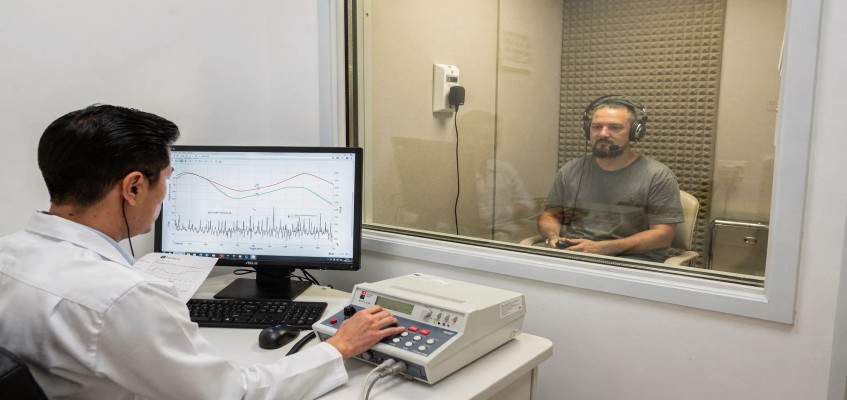
Pure tone audiometry to measure hearing thresholds
-
Tympanometry and acoustic reflex testing to assess middle ear function
-
Imaging (CT temporal bone) in selected cases, especially before surgery or if findings are atypical
An audiogram pattern suggestive of otosclerosis is conductive hearing loss, sometimes with a characteristic dip around 2 kHz (often called a Carhart notch). These tests also answer is otosclerosis unilateral or bilateral objectively by comparing both ears.
If you want an expert evaluation at a dedicated centre, consider booking at Ascent Hospital which is widely known as a best ENT Hospital in Kerala for advanced ear nose and throat care.
What unilateral vs bilateral means for treatment decisions
Hearing aids and early management
If you are confirmed to have otosclerosis, treatment is personalised. For many patients, especially early cases, modern digital hearing aids can significantly improve hearing.
When patients ask is otosclerosis unilateral or bilateral in relation to hearing aids, the practical question becomes whether you need one device or two. If only one ear is affected, a single hearing aid may be enough. If both ears are affected, using two devices may improve clarity and reduce listening effort.
For specialist guidance on hearing rehabilitation, you can consult the team at Best Doctor for Hearing Loss in Kerala.
Stapedectomy or stapedotomy for conductive hearing loss
Surgery can be considered when hearing loss is significant and testing suggests stapes fixation. Stapedectomy or stapedotomy aims to restore sound transmission by bypassing the fixed stapes.
If your key question is is otosclerosis unilateral or bilateral before surgery, here is what usually matters:
-
Surgery is often done on one ear at a time
-
The worse ear is commonly treated first
-
The second ear may be considered later depending on benefit, progression and patient preference
For patients exploring surgery, you can read about options with a Best Stapedectomy surgeon in kerala.
When the hearing loss is mixed or advanced
Otosclerosis can sometimes progress beyond purely conductive hearing loss. If there is inner ear involvement, hearing loss can become mixed (conductive plus sensorineural). In advanced cases, treatment may include hearing aids, surgical options when appropriate and in selected severe cases cochlear implantation.
Ascent has advanced ear care including a cochlear implantation centre. Learn more about the related expertise at Best ossiculoplasty surgeon in kerala for complex hearing restoration pathways.
When to see an ENT specialist urgently
Otosclerosis typically causes gradual hearing loss, not sudden severe pain. Still, seek prompt care if you have:
-
Sudden hearing loss
-
New severe vertigo
-
Ear discharge or fever
-
Rapidly worsening symptoms
Ascent provides 24/7 ENT emergency care. If you are in Kerala and need a comprehensive evaluation at an ENT clinic in Kerala, early testing can clarify whether the issue is otosclerosis or another treatable condition.
Choosing the right specialist and centre in Kerala
If you are researching otosclerosis unilateral or bilateral you are likely looking for a centre that can do accurate audiology, imaging when needed and offer both hearing aid and surgical pathways.
Ascent ENT Hospital Kerala is Kerala’s first ISO and NABH accredited ENT specialty hospital with expert ENT surgeons and advanced diagnostic support. To explore care with the best ENT surgeon in kerala you can start with a focused hearing assessment and counselling.
Conclusion
The most accurate answer to is otosclerosis unilateral or bilateral is that it can be either, and it commonly becomes bilateral over time even if it starts on one side. The pattern influences how hearing loss is experienced, what testing is needed and whether hearing aids or stapes surgery is the best next step.
If you suspect otosclerosis or have progressive hearing loss, get a complete evaluation at Ascent Hospital, a best ENT Hospital in Kerala, with access to expert surgeons, advanced diagnostics and modern hearing solutions. Schedule your appointment or request guidance via Contact Ascent Hospital.
Frequently Asked Questions
Is otosclerosis unilateral or bilateral in the beginning?
Otosclerosis may be noticed in one ear first, but it is often bilateral over time. Testing both ears is important even if symptoms feel one-sided.
Is otosclerosis unilateral or bilateral if only one ear feels blocked?
A blocked feeling in one ear can happen with unilateral otosclerosis, but the same symptom can occur with wax, eustachian tube issues or middle ear fluid. An audiology test is needed.
Is otosclerosis unilateral or bilateral and can it cause tinnitus?
Yes. Tinnitus can occur whether otosclerosis affects one ear or both.
Is otosclerosis unilateral or bilateral and does it always need surgery?
No. Many patients do well with hearing aids and monitoring. Surgery is considered based on hearing tests, daily impact and suitability.
Is otosclerosis unilateral or bilateral and will it keep getting worse?
Progression varies. Some people have slow changes, while others notice more steady decline. Regular hearing checks help guide timing of treatment.
Share



Our Professionals
 (1) (2).png)
Dr. Sharafudheen. P.K
Chief Consultant ENT & Cochlear Implant Surgeon
MBBS, MS (ENT), DORL DOHNS - RCS Ed (UK)
 (2).jpg)
Dr. Anuradha Varma. M.R
Senior Consultant ENT, Head & Neck Surgeon
MBBS, DLO
.jpeg)
Dr. Bijiraj Vathwam Veettil
Senior Consultant ENT Head & Neck, Sleep Surgeon
MBBS, MS (ENT), Fellowship in Snoring and Sleep apnea Surgeries (Singapore), Fellowship in sinus and skull base surgery
.png)
Dr. Prasanth Parameswaran
Senior Consultant ENT, Head & Neck Surgeon
MBBS, DLO, DNB (ENT), MNAMS, AASC (Specialist - Allergy and Immunotherapy), Fellowship in Snoring and Sleep apnea Surgeries (Singapore).

Dr. Arshad M Razi
Consultant ENT, Head & Neck Surgeon
MBBS, MS (ENT), Fellow in Head & Neck Surgical Oncology

Dr. Deepthi. N.V
Senior Consultant ENT, Head & Neck Surgeon
MBBS, DNB (ENT)


Dr. K Shilpa Nair
ENT Surgeon | Cochlear Implant & Sleep Surgery Specialist
MBBS, MS, DNB, MRCS(Eng), Post doctoral Fellowship in Implantation Otology


Dr. Nibi Shajahan
Consultant ENT, Head & Neck Surgeon
MBBS, MS (ENT), Fellowship in Snoring and Sleep apnea Surgeries (Singapore). Trained in Allergy and Immunotherapy




Dr.Anand Krishnan
Consultant ENT, Head and Neck Surgeon
MBBS ,DLO ,DNB ENT ,MRCS (ENGLAND)




Dr. Seshadri Ganesh. A.L
Senior Consultant Anaesthesiologist
MBBS, DCH, MD, DIP.N.B




Mr. Prasanth. N.P
Senior Audiologist & Speech Language Pathologist
BASLP, MASLP, MSc (Psy)

Ms. Chinju Johny
Audiologist & Speech Language Pathologist
BASLP, MSc (Audiology)



Our Patient Stories
View All Testimonials