Blogs
Allergic Rhinitis and Sleep Apnea: The Hidden Link Disrupting Your Sleep & Breathing
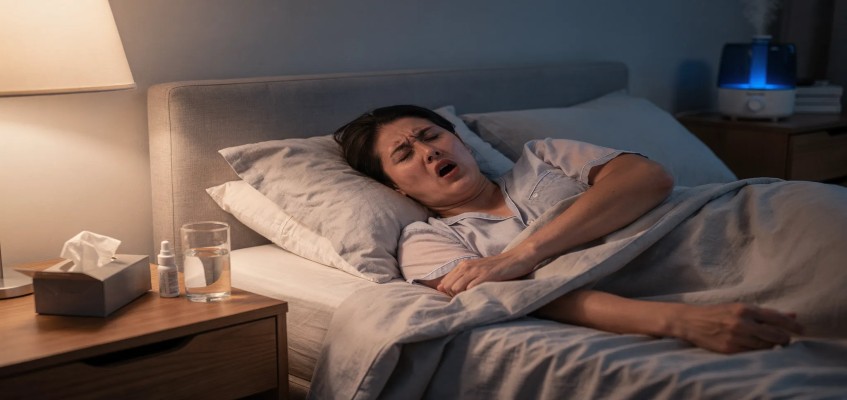
Allergic rhinitis and sleep apnea is when ongoing nasal allergy symptoms and disrupted breathing during sleep overlap and influence each other. In simple terms, a blocked, inflamed nose from allergies can make it harder to breathe well at night and can worsen snoring and pauses in breathing.
When people think of sleep apnea, they often focus only on the throat. But the nose matters too, and that is why allergic rhinitis and sleep apnea is a hidden link worth taking seriously. In this article, we look at how allergy driven nasal blockage affects airflow, sleep quality and oxygen levels, plus what a combined ENT and sleep evaluation can do.
You will learn the common warning signs, what tests actually help and how treating both conditions together often delivers better results than addressing either one alone.
Allergic rhinitis and sleep apnea: why your nose can disrupt your breathing at night
What happens in your nose during allergic rhinitis?
Allergic rhinitis is an immune reaction to triggers like dust mites, pollen, animal dander or mould. It commonly causes sneezing, itching and a runny or blocked nose.
The key issue is inflammation. The lining of the nose swells and produces more mucus. That swelling narrows the nasal airway, which increases resistance to airflow.
For many patients, symptoms are worse at night or early morning due to indoor allergens, bedroom dust and lying flat. This is where allergic rhinitis and sleep apnea can start feeding into each other.
How can nasal blockage worsen snoring and night time breathing?
Nasal breathing is the body’s preferred way to breathe during sleep. When the nose is blocked, people switch to mouth breathing. Mouth breathing can:
-
Reduce airway stability during sleep
-
Increase vibration of soft tissues that leads to snoring
-
Dry and irritate the throat, which can worsen inflammation
Higher nasal resistance is also associated with more fragmented sleep. Even without full obstructive sleep apnea, nasal obstruction can cause repeated micro awakenings and non refreshing sleep.
Can allergic rhinitis and sleep apnea cause each other?
Allergic rhinitis and sleep apnea does not mean allergies directly “create” obstructive sleep apnea in everyone. Sleep apnea is usually multi factorial, involving airway anatomy, muscle tone during sleep and factors like weight and age.
However, allergic rhinitis and sleep apnea can strongly interact in three practical ways:
1) Allergies can worsen existing sleep apnea
If you already have a narrow upper airway, adding nasal congestion can tip you into worse snoring, more frequent breathing events and poorer oxygenation.
2) Allergies can increase sleep fragmentation
Even when breathing pauses are mild, nasal blockage can increase arousals, making sleep lighter and less restorative.
3) Allergies can make sleep apnea treatment harder
Many people with obstructive sleep apnea use CPAP. A blocked nose can reduce tolerance to CPAP, increase mouth leak and reduce nightly adherence. In real life, improving nasal breathing often improves CPAP comfort.
These are the main reasons clinicians pay attention to allergic rhinitis and sleep apnea together rather than in isolation.
What symptoms suggest a combined problem?
People with allergic rhinitis and sleep apnea often report a mixture of daytime allergy complaints and night time breathing issues.
Here are practical clues to discuss with an ENT specialist or sleep physician:
| Symptom or sign | What it may indicate | What to do next |
|---|---|---|
| Persistent nasal blockage, worse at night | Ongoing nasal inflammation or structural narrowing | ENT nose exam and targeted rhinitis treatment |
| Loud snoring most nights | Increased airway vibration and possible obstruction | Sleep screening and upper airway evaluation |
| Waking up choking or gasping | Possible obstructive events | Consider a sleep study |
| Morning headaches or dry mouth | Mouth breathing or poor oxygenation | Review nasal patency and sleep quality |
| Excessive daytime sleepiness | Fragmented sleep from breathing events or congestion | Sleep evaluation plus allergy control |
If these sound familiar, allergic rhinitis and sleep apnea should be assessed as a linked pair.
Getting the right diagnosis: what tests matter?
A good evaluation usually includes both airway assessment and sleep assessment.
ENT evaluation of the nose
An ENT specialist may look for:
-
Swollen turbinates from allergies
-
Deviated nasal septum
-
Nasal polyps
-
Chronic sinus inflammation
For patients who suspect allergies, structured assessment and testing can be very helpful. You can learn more about Allergy Testing & Treatment at Ascent.
If sinus symptoms like facial pressure, thick discharge or reduced smell are part of the picture, evaluation for rhino sinus disease is important. See Rhinology and Sinus Diseases treatment for typical ENT pathways.
Sleep evaluation
To confirm obstructive sleep apnea, a sleep study is the standard. Depending on your case, this may be done in a lab or at home.
If snoring and breathing pauses are a concern, the Snoring / Obstructive Sleep Apnoea speciality page explains how ENT care fits into diagnosis and treatment planning.
Treatment that targets both breathing and inflammation
When allergic rhinitis and sleep apnea occur together, outcomes often improve when the plan addresses both nasal inflammation and night time airway obstruction.
Step 1: Control allergic rhinitis consistently
Common evidence based options include:
-
Daily intranasal corticosteroid sprays for inflammation
-
Non sedating antihistamines for sneezing and itching
-
Saline rinses to reduce mucus and allergen load
-
Allergen immunotherapy in selected patients with proven triggers
The goal is not just fewer sneezes. In allergic rhinitis and sleep apnea management, the goal is better nasal airflow at night and more stable sleep.
Step 2: Reduce bedroom triggers
Because night time exposure is a major driver, simple environmental control can support medical treatment:
-
Wash bedding regularly in hot water if dust mites are suspected
-
Use allergen resistant covers for pillows and mattresses
-
Keep pets out of the bedroom if dander is a trigger
-
Address damp areas to reduce mould
These steps are especially relevant when allergic rhinitis and sleep apnea symptoms peak at night.
Step 3: Treat obstructive sleep apnea properly
If you are diagnosed with obstructive sleep apnea, treatment may include:
-
CPAP or auto CPAP
-
Oral appliances in selected cases
-
Weight management and positional therapy where appropriate
-
Targeted ENT procedures when anatomy contributes to obstruction
A key point is that allergic rhinitis and sleep apnea treatment is not “either or”. It is often a combined plan that improves breathing comfort and long term control.
Step 4: Address structural nasal blockage when needed
Not all nasal blockages are purely allergic. A deviated septum, enlarged turbinates or nasal polyps can physically narrow airflow.
In selected patients, ENT procedures to improve nasal patency can help reduce symptoms and improve CPAP tolerance. Your ENT surgeon will advise what is suitable based on examination and imaging.
When should you see an ENT specialist?
Consider an ENT review if any of the following apply:
-
Snoring is frequent and disruptive
-
You have witnessed breathing pauses, choking or gasping during sleep
-
Daytime sleepiness affects work or driving safety
-
Nasal blockage is persistent despite basic medicines
-
You cannot tolerate CPAP because you “cannot breathe through the nose”
Early evaluation matters because untreated sleep apnea is linked with higher cardiovascular risk and poor daytime functioning, and persistent allergic inflammation can lead to chronic nose and sinus problems.
Why many patients in Kerala choose Ascent Hospital
If you are looking for an ENT clinic in Kerala that can evaluate both nasal allergy and sleep related breathing issues, Ascent Hospital brings ENT speciality focus under one roof.
Ascent ENT Hospital is Kerala’s first ISO and NABH accredited ENT specialty hospital with comprehensive ear, nose, throat, head and neck care. The team handles both allergy focused evaluation and snoring and sleep apnea pathways, which is important when allergic rhinitis and sleep apnea overlap.
You can explore Ascent Hospital for appointments and services. Many patients also search for the best ENT surgeon in Kerala when symptoms are persistent or when procedures are being considered, and choosing a specialist centre can make coordination of care simpler.
Key takeaway
Allergic rhinitis and sleep apnea commonly occur together because nasal inflammation increases resistance to airflow, promotes mouth breathing and can worsen snoring and obstructive events. A proper plan usually includes confirming sleep apnea with a sleep study, treating allergic rhinitis consistently and addressing any structural nasal or sinus issues that block breathing.
If you suspect allergic rhinitis and sleep apnea in yourself or a family member, do not settle for temporary relief. Get a combined ENT and sleep focused evaluation at the best ENT Hospital in Kerala, Ascent Hospital.
To take the next step, schedule a consultation or contact Ascent Hospital and get a personalised plan to breathe better and sleep better.
Share



Our Professionals
 (1) (2).png)
Dr. Sharafudheen. P.K
Chief Consultant ENT & Cochlear Implant Surgeon
MBBS, MS (ENT), DORL DOHNS - RCS Ed (UK)
 (2).jpg)
Dr. Anuradha Varma. M.R
Senior Consultant ENT, Head & Neck Surgeon
MBBS, DLO
.jpeg)
Dr. Bijiraj Vathwam Veettil
Senior Consultant ENT Head & Neck, Sleep Surgeon
MBBS, MS (ENT), Fellowship in Snoring and Sleep apnea Surgeries (Singapore), Fellowship in sinus and skull base surgery
.png)
Dr. Prasanth Parameswaran
Senior Consultant ENT, Head & Neck Surgeon
MBBS, DLO, DNB (ENT), MNAMS, AASC (Specialist - Allergy and Immunotherapy), Fellowship in Snoring and Sleep apnea Surgeries (Singapore).

Dr. Arshad M Razi
Consultant ENT, Head & Neck Surgeon
MBBS, MS (ENT), Fellow in Head & Neck Surgical Oncology

Dr. Deepthi. N.V
Senior Consultant ENT, Head & Neck Surgeon
MBBS, DNB (ENT)


Dr. K Shilpa Nair
ENT Surgeon | Cochlear Implant & Sleep Surgery Specialist
MBBS, MS, DNB, MRCS(Eng), Post doctoral Fellowship in Implantation Otology


Dr. Nibi Shajahan
Consultant ENT, Head & Neck Surgeon
MBBS, MS (ENT), Fellowship in Snoring and Sleep apnea Surgeries (Singapore). Trained in Allergy and Immunotherapy




Dr.Anand Krishnan
Consultant ENT, Head and Neck Surgeon
MBBS ,DLO ,DNB ENT ,MRCS (ENGLAND)




Dr. Seshadri Ganesh. A.L
Senior Consultant Anaesthesiologist
MBBS, DCH, MD, DIP.N.B




Mr. Prasanth. N.P
Senior Audiologist & Speech Language Pathologist
BASLP, MASLP, MSc (Psy)

Ms. Chinju Johny
Audiologist & Speech Language Pathologist
BASLP, MSc (Audiology)



Our Patient Stories
View All Testimonials