Blogs
What is Cleft Rhinoplasty? Procedure and Recovery Explained
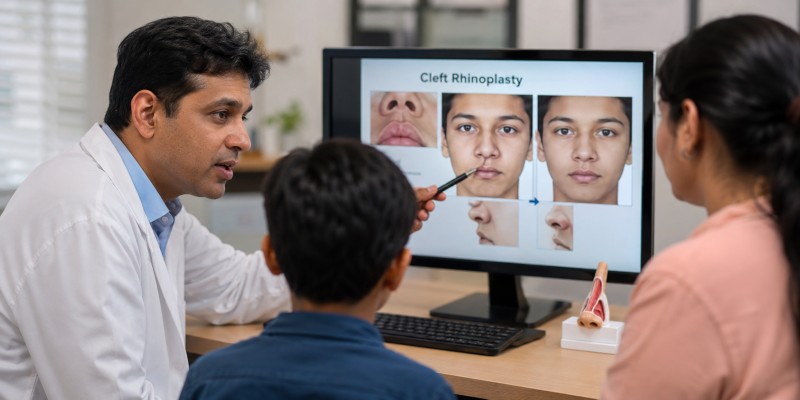
Cleft Rhinoplasty is nose surgery that improves the shape and function of a nose affected by cleft lip or cleft palate. It helps correct differences in the nostrils, nasal tip and airflow that can develop as a child grows.
Cleft Rhinoplasty is highly individual because every cleft nose is different. This guide explains why cleft noses change over time, what the procedure involves and how recovery usually progresses for children, teenagers and adults.
At Ascent Hospital, the best ENT Hospital in Kerala, patients can access advanced ear, nose, throat, head and neck care with experienced ENT specialists and modern diagnostic support.
Why the Cleft Nose Changes Over Time
People born with cleft lip, cleft palate or both may have differences in the bone, cartilage, skin and muscles around the nose. The cleft side of the nose may look flatter, wider or pulled downward. The nostril may sit lower than the other side.
Cleft lip repair improves facial structure early in life, but nasal growth continues for many years. As the face develops, nasal asymmetry can become more noticeable. Some patients also experience blocked breathing due to septal deviation, narrow nasal passages or weak cartilage support.
According to the NHS, cleft care is usually planned by a specialist team through childhood and into early adult life. This team based approach matters because the nose, lips, teeth, jaw, speech and hearing can all be connected.
No single nose shape is the goal. The best outcome is a nose that suits the patient’s face, supports breathing and looks balanced from the front, side and base views.
Who May Need Cleft Rhinoplasty?
A patient may need Cleft Rhinoplasty if the cleft side of the nose looks pulled down, the nostrils are uneven or breathing feels restricted. The surgery can be discussed when appearance affects confidence, when airway symptoms are present or when earlier cleft repair has left visible asymmetry.
Common reasons include:
-
Uneven nostril size or shape
-
A flattened or pulled nasal tip
-
Nasal blockage on one or both sides
-
A deviated septum linked to cleft anatomy
-
Scarring or asymmetry after earlier cleft repair
-
A desire for better facial balance and easier breathing
For children, timing depends on the child’s age, facial growth and overall cleft care plan. Not every patient needs surgery at every stage. The surgeon, cleft team and family should decide together after reviewing breathing, growth, speech, dental alignment and facial development.
| Stage | When it may be discussed | Main aim |
|---|---|---|
| Primary cleft nasal correction | During first cleft lip repair in infancy | Gentle nasal shaping |
| Intermediate correction | Childhood or teenage years when a functional issue is present | Improve symmetry and nasal airflow |
| Definitive Cleft Rhinoplasty | After facial growth is nearly complete | Long-term structure, balance and breathing improvement |
For general background on cosmetic and functional nose surgery, you can also read about Rhinoplasty at Ascent Hospital.
How Cleft Rhinoplasty is Planned
Before Cleft Rhinoplasty, the surgeon studies the patient’s face from different angles. The assessment usually looks at nostril position, nasal tip support, septum position, scars, facial symmetry, bite, jaw growth and nasal breathing.
At Ascent ENT Hospital Kerala, planning is supported by comprehensive ENT evaluation and advanced diagnostic imaging when required. A careful consultation helps set realistic goals and avoids a one size fits all approach.
Assessment may include:
-
Medical history and earlier cleft surgery details
-
Nasal airway exam
-
Facial growth and dental alignment review
-
Photography for surgical planning
-
Discussion of realistic goals, benefits and limits
Patients seeking an ENT clinic in Kerala can consult a specialist team for a personalised evaluation. Those exploring rhinoplasty surgery in Kerala can also review options for rhinoplasty treatment in Kerala through Ascent Hospital.
What Happens During Cleft Rhinoplasty?
The operation is usually performed under general anaesthesia. The exact plan depends on age, cleft type, previous surgeries, cartilage strength and breathing needs.
During Cleft Rhinoplasty, the surgeon reshapes the nose while respecting the special anatomy of a cleft related nose. This is more complex than routine cosmetic rhinoplasty because the tissues may be uneven, scarred or under supported.
Common surgical steps
The surgeon may make small incisions inside the nose or across the columella, which is the strip of skin between the nostrils. The skin is lifted carefully so the cartilage and bone can be adjusted.
The procedure may include reshaping cartilage, correcting a deviated septum when needed, placing grafts for support and closing the incisions with fine sutures. Cartilage grafts may come from the septum, ear or rib depending on the patient’s anatomy and the surgeon’s plan.
Functional goals
Breathing is a major part of cleft nose correction. If a deviated septum or narrow nasal passage contributes to blockage, the surgeon may address it during the same operation. Improving airflow can help daily comfort, sleep quality and exercise tolerance.
Aesthetic goals
Aesthetic correction focuses on nostril balance, nasal tip support, bridge alignment and overall facial harmony. The aim is not to erase natural identity. The goal is a balanced nose that looks natural and supports the rest of the face.
For a broader look at nose reshaping, you may read What is a Nose Job? and Rhinoplasty Secrets Unveiled.
Cleft Rhinoplasty Recovery Timeline
Most Cleft Rhinoplasty recovery plans include rest, nasal care, medicines and follow up visits. Swelling, bruising and mild discomfort are expected in the early phase. Severe pain is not typical and should be reported to the surgeon.
| Recovery period | What to expect | Helpful care |
|---|---|---|
| First 24 to 48 hours | Swelling, mild bleeding or blocked nose may occur | Rest with head elevated and take medicines as prescribed |
| First week | A splint or dressings may be used | Avoid pressure on the nose and attend review visits |
| 2 to 3 weeks | Bruising and visible swelling reduce | Return to light routines if the surgeon agrees |
| 6 to 12 weeks | Breathing and swelling continue to improve | Avoid contact sports until cleared |
| Several months | Final shape becomes more defined | Keep follow up appointments |
Swelling often improves noticeably in the first few weeks, but the nasal tip can stay firm or swollen for months. Final refinement takes time because skin and cartilage settle slowly after surgery.
Do not wear heavy glasses unless your surgeon permits it. Avoid blowing the nose forcefully in the early recovery period. Your surgeon may give saline sprays, wound care instructions and activity restrictions. Follow them closely for safe healing.
Possible Risks and When to Call Your Doctor
Like any operation, this surgery has possible risks. These may include bleeding, infection, scarring, persistent blockage and need for revision surgery. Some asymmetry can remain because cleft anatomy is naturally complex.
Call your surgeon if bleeding soaks dressings repeatedly. Seek urgent care for high fever, worsening pain, breathing difficulty or sudden vision changes. Early reporting helps your care team respond before a minor concern becomes serious.
Choosing the Right Hospital and Surgeon in Kerala
Because cleft nasal surgery sits at the crossroads of ENT, facial plastic surgery and cleft care, experience matters. A good surgeon should discuss both appearance and function, explain limitations clearly and customize the plan.
Ascent ENT Hospital is often chosen by patients searching for the best ENT Hospital in Kerala because it brings ENT expertise, modern facilities and comprehensive speciality care under one system. It is Kerala’s first ISO and NABH accredited ENT specialty hospital and offers services such as advanced diagnostic imaging, day care ENT surgeries and 24/7 ENT emergency care.
Patients looking for a best ENT Clinic in Kerala can contact Ascent for a detailed ENT assessment. If you are looking for the best ENT surgeon in Kerala, choose a team that evaluates breathing, facial structure and long-term outcomes rather than focusing only on appearance.
Procedure specific care is also available for patients searching for the best rhinoplasty surgeon in Kerala. A consultation can help you understand whether surgery is appropriate, what can realistically improve and how recovery will be managed.
Key Takeaways
Cleft Rhinoplasty can improve nasal symmetry, support and breathing when it is planned around cleft anatomy and long-term facial growth. It is not a standard cosmetic nose operation. It requires careful assessment, realistic expectations and an experienced ENT or facial plastic surgery team.
If you want expert guidance for cleft related nasal concerns in Kerala, schedule a consultation with Ascent Hospital today. The right evaluation can help you understand your options and choose a safe path toward better breathing, balance and confidence.
Frequently Asked Questions
1. Is Cleft Rhinoplasty only cosmetic?
No. The surgery may improve appearance and breathing. Many patients need both structural support and airway correction.
2. At what age can cleft nose correction be done?
Timing depends on age, facial growth, symptoms and previous cleft treatment. Minor correction may be considered earlier in some cases, while definitive correction is often planned after facial growth is nearly complete.
3. How painful is recovery?
Pain is usually manageable with prescribed medicines. Most patients describe pressure, swelling and stuffiness more than severe pain.
4. Will one surgery fix everything?
Some patients get a strong improvement with one procedure. Others may need staged care because cleft related nasal changes can be complex and growth can affect results.
Share


Our Professionals
 (1) (2).png)
Dr. Sharafudheen. P.K
Chief Consultant ENT & Cochlear Implant Surgeon
MBBS, MS (ENT), DORL DOHNS - RCS Ed (UK)
 (2).jpg)
Dr. Anuradha Varma. M.R
Senior Consultant ENT, Head & Neck Surgeon
MBBS, DLO
.jpeg)
Dr. Bijiraj Vathwam Veettil
Senior Consultant ENT Head & Neck, Sleep Surgeon
MBBS, MS (ENT), Fellowship in Snoring and Sleep apnea Surgeries (Singapore), Fellowship in sinus and skull base surgery
.png)
Dr. Prasanth Parameswaran
Senior Consultant ENT, Head & Neck Surgeon
MBBS, DLO, DNB (ENT), MNAMS, AASC (Specialist - Allergy and Immunotherapy), Fellowship in Snoring and Sleep apnea Surgeries (Singapore).
Dr. Arshad M Razi
Consultant ENT, Head & Neck Surgeon
MBBS, MS (ENT), Fellow in Head & Neck Surgical Oncology
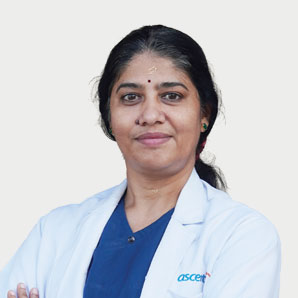
Dr. Deepthi. N.V
Senior Consultant ENT, Head & Neck Surgeon
MBBS, DNB (ENT)

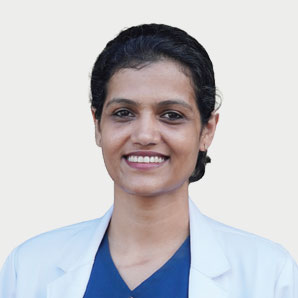
Dr. K Shilpa Nair
ENT Surgeon | Cochlear Implant & Sleep Surgery Specialist
MBBS, MS, DNB, MRCS(Eng), Post doctoral Fellowship in Implantation Otology

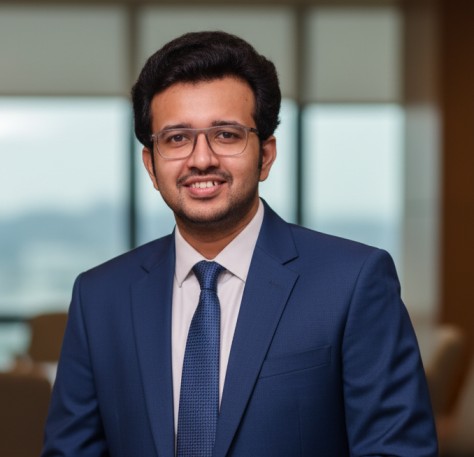
Dr. Nibi Shajahan
Consultant ENT, Head & Neck Surgeon
MBBS, MS (ENT), Fellowship in Snoring and Sleep apnea Surgeries (Singapore). Trained in Allergy and Immunotherapy




Dr.Anand Krishnan
Consultant ENT, Head and Neck Surgeon
MBBS ,DLO ,DNB ENT ,MRCS (ENGLAND)


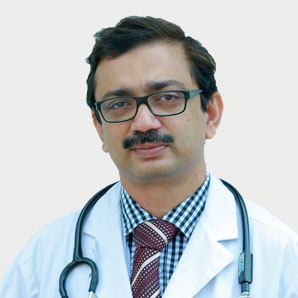
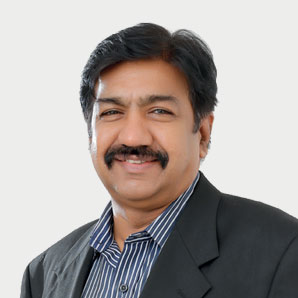
Dr. Seshadri Ganesh. A.L
Senior Consultant Anaesthesiologist
MBBS, DCH, MD, DIP.N.B
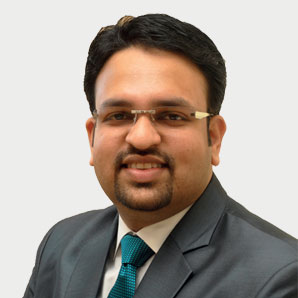
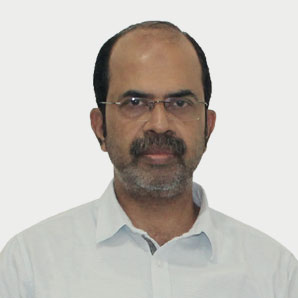
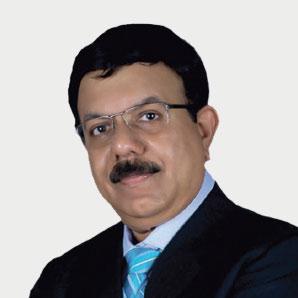

Mr. Prasanth. N.P
Senior Audiologist & Speech Language Pathologist
BASLP, MASLP, MSc (Psy)

Ms. Chinju Johny
Audiologist & Speech Language Pathologist
BASLP, MSc (Audiology)



Our Patient Stories
View All Testimonials