Blogs
Adenoid Facies: What It Is, Causes, Symptoms and Treatment
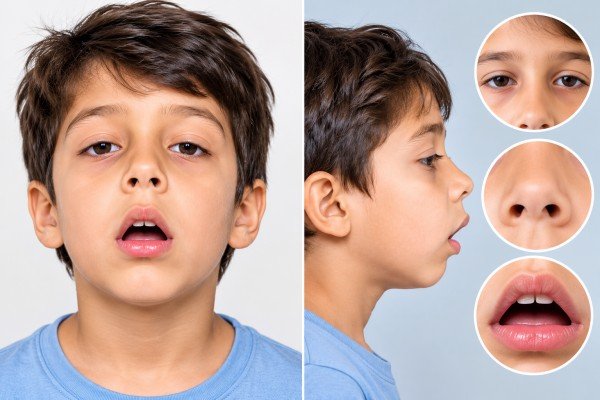
If you have ever looked at your child and felt like something about their face looked "different" lately, longer, sleepier, mouth always hanging open, then you might be looking at adenoid facies. In plain terms, it is a facial appearance caused by chronic mouth breathing, usually because swollen adenoids are blocking the nose.
It is not a disease by itself. It is more like a visible clue that something upstream. The adenoids sitting behind the nose have been causing trouble for a while. If you are trying to figure out where to even start, it often helps to speak with an ENT specialist in Kerala who can look at the nose and airway together instead of just the face.
Parents often notice it slowly, over months, that's why it gets missed. This article walks through what causes adenoid facies, how to spot it early and what actually helps once it is confirmed.
Families dealing with this for the first time sometimes reach out to Ascent ENT hospital Kerala, unsure which doctor to consult. That confusion is normal and it usually clears up after the first proper consultation.
What Exactly is Adenoid Facies?
Adenoids are small pads of tissue tucked behind the nose, right where the nasal passage meets the throat. In kids they are naturally a bit larger, part of the immune system doing its job. But sometimes they grow too big or they stay enlarged after repeated infections and that blocks normal nasal airflow.
Since adenoids sit so close to the throat and neck region, doctors evaluating this often look at the wider throat head and neck area rather than just the nose alone. Since blockages here can affect breathing, voice and even ear function together.
When a child cannot breathe through the nose properly, the body adapts. The mouth stays open most of the day and night. Over months and years, this constant mouth breathing can literally reshape how the face grows. That reshaping is what doctors call adenoid facies.
It typically includes a longer, narrower face, a slightly open mouth at rest, a receding chin and a flatter appearance around the nose. Some children also develop a "gummy smile" because the upper lip does not sit properly over the teeth anymore.
Why Do Adenoid Facies Happen? The Real Causes
The short version: blocked nose, mouth breathing, changed facial growth. But there is more nuance worth knowing.
Chronic adenoid enlargement
This is the main driver. Repeated colds, allergies or infections keep irritating the adenoid tissue. And it stays swollen instead of shrinking back down.
Allergic rhinitis
Kids with ongoing nasal allergies often breathe through their mouth even without huge adenoids. Simply because their nose feels blocked most days.
Untreated sinus infections
Chronic sinus inflammation adds to nasal congestion and pushes the habit of mouth breathing further. Interestingly, a lot of parents first come across this topic while searching whether adenoids in children can cause snoring. And the two issues are usually connected.
Age of onset
The earlier this starts, generally somewhere between ages 2 and 6, the more the facial bones are affected. Since that is a period of active jaw and facial growth.
Genetics and jaw structure
Some children are simply more prone to a narrow palate or receding chin. And mouth breathing tends to make an already-narrow jaw structure worse.
It is worth saying clearly, this is not something that happens overnight. It builds up. And that is exactly why a lot of parents come in only after a teacher, a dentist or a relative points it out. If a general checkup raises a red flag, a nearby ENT clinic in Kerala is usually the right next stop before things progress further.
Recognizing Adenoid Facies: Symptoms and Features
Some of the features are visible just by looking at the child's face. While others show up more in behavior and sleep.
Common signs include:
-
Mouth constantly open, even while watching TV or doing homework
-
A long, "sleepy" looking face with flattened cheekbones
-
Dry, cracked lips from mouth breathing
-
Snoring or noisy breathing at night
-
Dark circles under the eyes
-
A high, narrow palate (roof of the mouth)
-
Nasal, muffled voice
-
Frequent ear infections or a feeling of blocked ears
Not every child with adenoid facies features has all of these. Usually it is a combination of two or three that pushes parents to ask a doctor. And honestly, snoring is often the symptom that gets noticed first, well before the facial changes register. If snoring has been a recurring issue at home, it is worth reading about snoring and obstructive sleep apnea since the two conditions frequently overlap in children.
There is also a behavioral side that gets overlooked. Kids who sleep badly because of blocked airways can seem cranky, inattentive at school or unusually tired during the day. Parents sometimes chase this as a "focus problem" for months before anyone connects it back to breathing.
Quick Comparison: Typical Nasal Breather vs Child with Adenoid Facies
| Feature | Typical Nasal Breather | Child with Adenoid Facies |
|---|---|---|
| Mouth position at rest | Closed | Usually open |
| Face shape | Rounder, shorter | Longer, narrower |
| Sleep quality | Generally quiet | Snoring, restless |
| Voice | Clear | Nasal or muffled |
| Palate shape | Normal curve | Often high and narrow |
| Daytime behavior | Alert | Often tired or irritable |
If the table above looks familiar and you are still unsure where to go next, it might help to browse a guide on how to find the best ear nose and throat clinic before booking an appointment.
How are Adenoid Facies Diagnosed?
It usually starts with just a physical exam. The ENT will look at the nose and throat, watch how the child breathes, that kind of thing. From there, they might use a small camera (nasal endoscopy) or take an X-ray of the side of the neck to get a clearer picture of how blocked the airway actually is.
They'll also ask a bunch of questions, about sleep, snoring, how often the kid's getting colds or ear infections. This matters because the adenoids sit right next to the eustachian tube. So the two are kind of linked. If there's a pattern of ear blockages, the doctor might suggest an eustachian tube function test alongside checking the adenoids.
Honestly, it helps a lot to walk in with some background ready. When the mouth breathing first started, if it flares up with seasons or allergies, whether anyone else in the family had similar facial changes growing up. Doctors can move faster with that kind of context. It's also part of why a lot of parents just stick with the same best ENT doctor in Kerala instead of hopping between clinics every time something comes up.
Adenoid Facies Treatment: What Actually Works
This is the part parents care about most. So let's get into it directly.
Medical management first - If allergies or mild infection are driving the swelling, doctors often try nasal sprays, antihistamines or a short course of medication before considering surgery. Many mild cases improve with this approach alone. Especially if caught early. Most treatment plans start here before anything more invasive is discussed.
Adenoidectomy (surgical removal) - When adenoids are significantly enlarged and blocking the airway consistently, removing them is usually the most effective treatment. It is a fairly quick, well-established procedure and children typically recover within a week or two. If you are weighing this option, it helps to understand adenoidectomy in children, when it is needed, procedure and recovery before the consultation. So you walk in with the right questions.
Orthodontic support - Once the airway issue is resolved, some children need help correcting the jaw and palate changes that already happened. A dentist or orthodontist can help in this part.
Coblation technique - Some hospitals now use a gentler, radiofrequency-based method instead of traditional surgery. It tends to mean less bleeding and a smoother recovery. Parents researching options often ask specifically is coblation adenoidectomy safe for children. For most healthy kids, yes, it is considered a safe and well-tolerated option.
Myofunctional therapy - In select cases, exercises that retrain the tongue and lip muscles help the child relearn nasal breathing after the physical blockage is cleared. It is not needed for everyone. But it can speed up how quickly the facial appearance normalizes.
One thing worth repeating: earlier treatment tends to mean better facial recovery. Facial bones in young children are still developing. So removing the obstruction while growth is still happening gives the best chance of the face "catching up" to a more typical shape. This is usually where the best ENT surgeon in Kerala can walk you through timing. Since waiting too long sometimes means more correction is needed later.
Can Adenoid Facies Be Reversed?
To a meaningful extent, yes, especially in younger children. Once nasal breathing is restored, natural growth patterns often correct a good portion of the facial changes over the following one to two years. Older kids and teens may see partial improvement, though some structural changes (like a narrow palate) may need orthodontic correction. Getting evaluated early at a best ENT hospital in Kerala genuinely changes how much of this can bounce back on its own.
When Should You See a Doctor?
If your child snores regularly, breathes through the mouth most of the day or seems constantly tired despite a full night's sleep, it is worth getting checked. Waiting rarely helps here and the earlier the evaluation, the simpler the treatment tends to be. Knowing how to choose the best ENT for treatment can make that first step less overwhelming. Especially if this is your family's first time dealing with an ENT concern.
Snoring on its own does not always mean surgery is coming. Sometimes simple, non-surgical snoring remedies and devices are enough to manage things while the adenoids are monitored over time.
It is also worth mentioning that adenoid problems often travel with related issues like recurring ear infections. If your child has had several rounds of ear trouble, it may be useful to read about battling otitis media in children. Since the two conditions often need to be managed together.
Ear pain that keeps coming back deserves its own attention too. Parents in this situation often end up searching for the best doctor for ear infection in Kerala around the same time they are dealing with the adenoid issue. Treating both together tends to work better than handling them separately.
Final Thoughts
Adenoid facies is not something to panic about. But it is also not something to brush off as "just how their face looks." It is usually the visible result of a blocked airway that has been quietly affecting sleep, growth and even school performance for a while. The good news is that once identified, treatment options are well established. And results, especially in young children, tend to be encouraging.
At Ascent Hospital, our ENT team regularly evaluates and treats children showing early signs of adenoid facies features, from simple nasal blockages to more advanced cases needing surgical care.
Choosing where to go for this kind of evaluation matters more than people expect. If you are comparing options, this short guide on what to look for when choosing an ENT hospital covers the basics worth checking before you commit to a clinic.
If you have noticed persistent mouth breathing, snoring or facial changes in your child, do not wait for it to "sort itself out." Schedule a consultation with our team today and get a clear picture of what is actually going on and what the right next step looks like for your child.
Frequently Asked Questions
1. Is adenoid facies permanent?
Not always. In younger children, facial features often improve naturally once the underlying nasal obstruction is treated. Older children may need additional orthodontic help for full correction.
2. At what age do adenoid facies usually appear?
Mostly show up between 3 and 8 years old. But it really depends on how long the kid's been breathing through their mouth.
3. Does every mouth breather have adenoid facies?
No. Breathing through your mouth for a week while you've got a cold won't do anything lasting. It's only when it drags on for months or years that the face actually starts changing.
4. Is surgery always required?
Not really, mild cases can often get better with allergy meds or nasal sprays. Surgery's usually saved for the worse, longer-lasting blockages.
5. Can adults have adenoid facies too?
Pretty rare honestly, since adenoids shrink down by the teen years anyway. But if it wasn't fixed as a kid, that facial look can just stick around into adulthood.
Share
 (1) (2).png)
Our Professionals
Dr. Sharafudheen. P.K
Chief Consultant ENT & Cochlear Implant Surgeon
MBBS, MS (ENT), DORL DOHNS - RCS Ed (UK)
 (2).jpg)
Dr. Anuradha Varma. M.R
Senior Consultant ENT, Head & Neck Surgeon
MBBS, DLO
.jpeg)
Dr. Bijiraj Vathwam Veettil
Senior Consultant ENT Head & Neck, Sleep Surgeon
MBBS, MS (ENT), Fellowship in Snoring and Sleep apnea Surgeries (Singapore), Fellowship in sinus and skull base surgery
.png)
Dr. Prasanth Parameswaran
Senior Consultant ENT, Head & Neck Surgeon
MBBS, DLO, DNB (ENT), MNAMS, AASC (Specialist - Allergy and Immunotherapy), Fellowship in Snoring and Sleep apnea Surgeries (Singapore).

Dr. Arshad M Razi
Consultant ENT, Head & Neck Surgeon
MBBS, MS (ENT), Fellow in Head & Neck Surgical Oncology
Dr. Deepthi. N.V
Senior Consultant ENT, Head & Neck Surgeon
MBBS, DNB (ENT)

Dr. K Shilpa Nair
ENT Surgeon | Cochlear Implant & Sleep Surgery Specialist
MBBS, MS, DNB, MRCS(Eng), Post doctoral Fellowship in Implantation Otology


Dr. Nibi Shajahan
Consultant ENT, Head & Neck Surgeon
MBBS, MS (ENT), Fellowship in Snoring and Sleep apnea Surgeries (Singapore). Trained in Allergy and Immunotherapy




Dr.Anand Krishnan
Consultant ENT, Head and Neck Surgeon
MBBS ,DLO ,DNB ENT ,MRCS (ENGLAND)




Dr. Seshadri Ganesh. A.L
Senior Consultant Anaesthesiologist
MBBS, DCH, MD, DIP.N.B




Mr. Prasanth. N.P
Senior Audiologist & Speech Language Pathologist
BASLP, MASLP, MSc (Psy)

Ms. Chinju Johny
Audiologist & Speech Language Pathologist
BASLP, MSc (Audiology)



Our Patient Stories
View All Testimonials