Blogs
Septoplasty vs Rhinoplasty: Differences, Benefits and Recovery
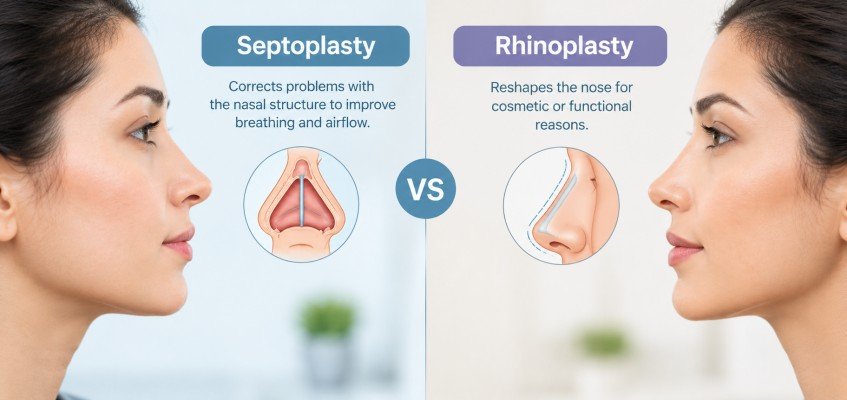
Septoplasty vs Rhinoplasty is mainly a comparison between two nose surgeries that have different goals. Septoplasty corrects problems inside the nose such as a deviated nasal septum while rhinoplasty changes the shape or structure of the nose.
The difference can seem small at first because both procedures involve the nose. But they are done for different reasons and sometimes they are performed together when a person has both breathing problems and concerns about the appearance of their nose. This guide looks at the Septoplasty vs Rhinoplasty differences including why each procedure is done, their benefits, recovery and when one or both may be recommended.
If you are considering treatment it also helps to understand the role of an experienced ENT team. You can learn more about Ascent Hospital and the ENT services available before deciding on your next step.
What is Septoplasty?
Septoplasty is a surgical procedure used to correct a deviated nasal septum. The septum is the wall of cartilage and bone that separates the left and right nasal passages.
Ideally the septum sits reasonably straight. In some people it is bent or displaced. This can happen naturally or may develop after an injury. A deviated septum does not always cause symptoms but when it does it may affect breathing and everyday comfort.
Common reasons an ENT specialist in Kerala may consider septoplasty include:
-
Difficulty breathing through one or both nostrils
-
Frequent nasal blockage
-
Persistent nasal congestion related to a structural problem
-
Repeated sinus-related symptoms in some patients
-
Snoring associated with nasal obstruction
-
Breathing problems that do not improve with suitable medical treatment
Septoplasty does not change the external appearance of the nose. Its main purpose is to improve the internal structure of the nose and help with airflow.
If nasal obstruction is affecting your daily life an evaluation by an ENT specialist can help determine whether the septum is actually responsible.
What is Rhinoplasty?
Rhinoplasty is a procedure that changes the shape or structure of the nose. People may consider it because they are unhappy with a particular feature of their nose or because an injury has changed its shape.
Rhinoplasty surgery in Kerala may involve changes to the nasal bridge tip or other structural areas. The procedure is planned according to the person's facial features and the reason for surgery.
Some common reasons for rhinoplasty include:
-
Changing the size or shape of the nose
-
Reshaping the nasal tip
-
Correcting a hump on the bridge
-
Improving facial balance
-
Correcting certain deformities after an injury
-
Addressing some structural problems that affect breathing
If you want to understand the procedure in simpler terms you can also read What is a Nose Job?.
Unlike septoplasty, rhinoplasty can have a clear cosmetic component. However functional rhinoplasty can also address breathing problems when the external nasal structure contributes to the obstruction.
Septoplasty vs Rhinoplasty: Key Differences
The following table makes the Septoplasty vs Rhinoplasty comparison easier to understand.
| Feature | Septoplasty | Rhinoplasty |
|---|---|---|
| Main purpose | Improve nasal function and airflow | Change nasal shape or structure |
| Main area treated | Nasal septum inside the nose | Outer nasal structure |
| Common reason | Deviated septum | Cosmetic or structural concerns |
| Can breathing improve? | Yes | Sometimes |
| Changes external appearance? | Usually No | Yes |
| May be done after injury? | Yes | Yes |
| Cosmetic goal | Usually not the main goal | May be an important goal |
| Can they be combined? | Yes | Yes |
The Septoplasty vs Rhinoplasty decision is therefore not always about choosing one procedure over the other. In some situations a patient may benefit from both.
What are the Benefits of Septoplasty?
The main benefit of septoplasty is improved nasal airflow when a deviated septum is responsible for the obstruction.
Some people notice that they can breathe more comfortably through their nose after recovery. Better nasal airflow may also make exercise or sleep more comfortable for people who previously struggled with significant obstruction.
Other possible benefits include:
-
Reduced feeling of nasal blockage
-
Improved airflow through the nose
-
Better nasal breathing during physical activity
-
Improved comfort while sleeping
-
Reduced dependence on certain temporary measures used to deal with congestion
The results depend on the actual cause of the breathing problem. A deviated septum may not be the only reason someone has nasal obstruction. This is why a proper examination matters before deciding on surgery.
For broader information about selecting an ENT provider you can read How to Choose the Best ENT for Treatment.
What are the Benefits of Rhinoplasty?
Rhinoplasty can help change the proportions and appearance of the nose. For some people the goal may be quite subtle. They may simply want a small correction rather than a completely different nose.
The potential benefits can include:
-
Improved balance between the nose and other facial features
-
Correction of certain nasal irregularities
-
Reshaping of the nasal tip
-
Correction of a nasal hump
-
Improvement of some structural breathing problems
-
Correction of changes caused by previous trauma
The expected result should be discussed carefully with the surgeon. A good rhinoplasty plan considers the person's facial structure rather than trying to copy another person's nose.
You can also explore Understanding Augmentation Rhinoplasty to learn more about one type of rhinoplasty and what it involves.
Can Septoplasty and Rhinoplasty Be Done Together?
Yes. In most of the patients both procedures are performed during the same operation. This is sometimes called septorhinoplasty.
This approach may be considered when a person has a deviated septum along with an external nasal problem or when changes to the nasal structure are needed to improve both appearance and breathing.
For example a person may have difficulty breathing because the internal septum is deviated while also having an external nasal structure that contributes to the obstruction. Treating only one issue may not provide the desired result.
You can read more about Septo Rhinoplasty: Benefits, Procedure & Recovery if you are considering a combined procedure.
The exact approach depends on the anatomy of the nose and the person's goals. It is not automatically better to combine surgeries. An ENT surgeon in Kerala needs to assess whether it is appropriate.
Septoplasty vs Rhinoplasty: What is Recovery Like?
Recovery is another important part of the Septoplasty vs Rhinoplasty discussion.
After septoplasty there may be some nasal congestion swelling or mild discomfort for a period of time. The nose can feel blocked even though the underlying problem has been corrected. This can be frustrating but it is often part of the normal healing process.
Rhinoplasty recovery can take longer because the external structures of the nose are also reshaped. Swelling and bruising may occur around the nose and sometimes under the eyes. Much of the visible swelling improves gradually but the final shape can take considerably longer to settle.
General recovery after septoplasty
Patients are usually advised to avoid activities that could put pressure on the nose during the early healing period. Heavy exercise may need to be restricted temporarily.
The nose may feel congested during the first part of recovery. Follow-up appointments are important so the surgeon can check healing and provide any necessary aftercare instructions.
General recovery after rhinoplasty
Rhinoplasty recovery varies from person to person. Bruising and swelling are common during the early stage. The visible appearance usually improves gradually rather than changing overnight.
Even when the nose looks much better after a few weeks some internal swelling may remain. The final result can take several months to become clear.
For patients interested in rhinoplasty after specific nasal concerns it may also be useful to read about Who Needs Rhinoplasty?.
How Long Does Recovery Take?
There is no single recovery timeline that applies to everyone. The type of surgery, the extent of correction and the person's healing response all matter.
In general people can expect the early recovery period to be shorter than the time needed for complete healing. You may be able to return to routine activities relatively soon but strenuous exercise and activities that could injure the nose may need to wait longer.
With rhinoplasty the final appearance can continue to change as swelling settles. This is one reason patients are usually advised to be patient during recovery.
If a combined septoplasty and rhinoplasty is performed the recovery plan will take both procedures into account.
Choosing Between Septoplasty and Rhinoplasty
The Septoplasty vs Rhinoplasty choice should not be made based only on appearance or on what worked for another person.
If your main problem is difficulty breathing because of a deviated septum then septoplasty may be considered. If your concern is the shape or appearance of the nose then rhinoplasty may be more suitable.
Some people have both functional and cosmetic concerns. In those cases a combined procedure may be discussed.
An assessment at an ENT clinic in Kerala can help identify whether the problem comes from the septum nasal bones cartilage or another part of the nasal passage.
It is also worth asking about the surgeon's experience with the specific procedure you are considering. Choosing a best ENT surgeon in Kerala should be based on relevant experience, proper evaluation and clear communication rather than on a title alone.
What Happens During the Consultation?
A consultation usually starts with a discussion about your symptoms, goals and medical history. The doctor may examine the inside and outside of the nose and assess how well you can breathe through each side.
Depending on the situation additional examination or imaging may be recommended.
For cosmetic concerns the surgeon may also discuss what changes are realistic. This part of the consultation matters because rhinoplasty is not simply about making the nose smaller or changing one feature in isolation.
A detailed discussion can also help explain whether septoplasty rhinoplasty or a combined procedure is more appropriate.
For patients looking for the best ENT clinic in Kerala it is useful to choose a hospital where both functional and structural nasal concerns can be assessed.
Septoplasty vs Rhinoplasty: Which One is Right for You?
The Septoplasty vs Rhinoplasty question becomes much easier once the reason for treatment is clear. To correct internal nasal problems septoplasty is the primary option. To reshape the nose although it can also have a functional purpose, rhinoplasty is mainly used.
When both breathing and appearance are concerned a combined procedure may sometimes be appropriate. The important thing is to have the nose properly examined rather than deciding based on symptoms alone.
Ascent Hospital provides ENT care for patients looking for experienced evaluation and treatment. If you are searching for the best ENT hospital in Kerala it is important to choose a centre where your concerns can be discussed in detail and the treatment plan is based on your individual needs.
For patients in North Kerala you can also learn more about Ascent ENT Hospital in Calicut and the available ENT services.
Key Takeaways
Understanding Septoplasty vs Rhinoplasty starts with knowing that the two procedures have different primary goals. Recovery also differs. Septoplasty generally involves internal healing and temporary congestion while rhinoplasty can involve visible swelling and a longer period before the final shape becomes clear. When both functional and structural concerns are present a combined septorhinoplasty may be considered.
If you are unsure which treatment may be suitable for your symptoms or goals, talk to an experienced ENT surgeon rather than trying to make the decision on your own. You can schedule a consultation with Ascent Hospital to discuss your nasal breathing concerns or rhinoplasty goals and understand the options available to you.
Frequently Asked Questions
1. Is septoplasty the same as rhinoplasty?
No. Septoplasty mainly corrects the nasal septum to improve nasal function while rhinoplasty changes the shape or structure of the nose. The two procedures can sometimes be performed together.
2. Which is better, septoplasty or rhinoplasty?
Neither procedure is automatically better. They serve different purposes. The right choice depends on whether the main concern is nasal breathing, structural problems, appearance or a combination of these.
3. Does septoplasty change the shape of the nose?
Usually the main goal of septoplasty is to correct the internal septum rather than change the external appearance. Usually it does not change the external appearance.
4. Can rhinoplasty improve breathing?
It can in selected cases. Some nasal structures can contribute to breathing problems and functional rhinoplasty may address these issues. A proper examination is needed to identify the cause.
5. Is rhinoplasty recovery painful?
Some discomfort is possible during recovery. Swelling congestion and a feeling of pressure are also common. Your surgeon can recommend suitable pain management and aftercare based on your procedure.
Share
 (1) (2).png)


Our Professionals
Dr. Sharafudheen. P.K
Chief Consultant ENT & Cochlear Implant Surgeon
MBBS, MS (ENT), DORL DOHNS - RCS Ed (UK)
 (2).jpg)
Dr. Anuradha Varma. M.R
Senior Consultant ENT, Head & Neck Surgeon
MBBS, DLO
.jpeg)
Dr. Bijiraj Vathwam Veettil
Senior Consultant ENT Head & Neck, Sleep Surgeon
MBBS, MS (ENT), Fellowship in Snoring and Sleep apnea Surgeries (Singapore), Fellowship in sinus and skull base surgery
.png)
Dr. Prasanth Parameswaran
Senior Consultant ENT, Head & Neck Surgeon
MBBS, DLO, DNB (ENT), MNAMS, AASC (Specialist - Allergy and Immunotherapy), Fellowship in Snoring and Sleep apnea Surgeries (Singapore).

Dr. Arshad M Razi
Consultant ENT, Head & Neck Surgeon
MBBS, MS (ENT), Fellow in Head & Neck Surgical Oncology

Dr. Deepthi. N.V
Senior Consultant ENT, Head & Neck Surgeon
MBBS, DNB (ENT)


Dr. K Shilpa Nair
ENT Surgeon | Cochlear Implant & Sleep Surgery Specialist
MBBS, MS, DNB, MRCS(Eng), Post doctoral Fellowship in Implantation Otology


Dr. Nibi Shajahan
Consultant ENT, Head & Neck Surgeon
MBBS, MS (ENT), Fellowship in Snoring and Sleep apnea Surgeries (Singapore). Trained in Allergy and Immunotherapy




Dr.Anand Krishnan
Consultant ENT, Head and Neck Surgeon
MBBS ,DLO ,DNB ENT ,MRCS (ENGLAND)




Dr. Seshadri Ganesh. A.L
Senior Consultant Anaesthesiologist
MBBS, DCH, MD, DIP.N.B




Mr. Prasanth. N.P
Senior Audiologist & Speech Language Pathologist
BASLP, MASLP, MSc (Psy)

Ms. Chinju Johny
Audiologist & Speech Language Pathologist
BASLP, MSc (Audiology)



Our Patient Stories
View All Testimonials