Blogs
Migraine and Cervical Pain: Understanding the Hidden Connection Between Neck Pain and Headaches
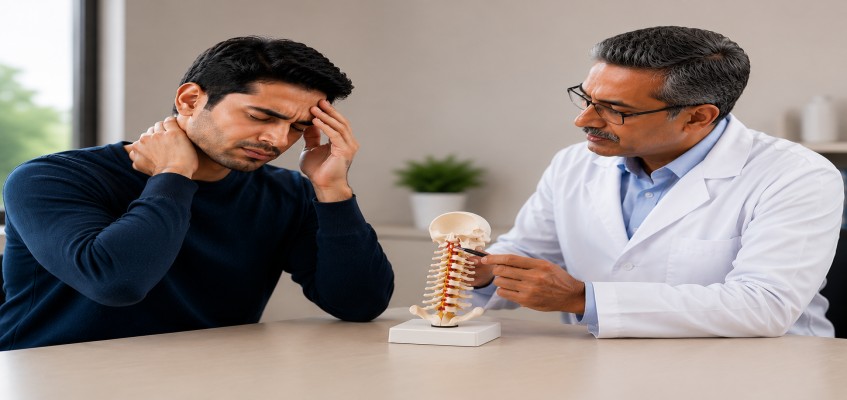
Migraine and cervical pain means migraine attacks that are closely linked with neck discomfort or neck problems. It can feel like a headache that starts in the head but is fuelled by the neck.
Migraine and cervical pain is more common than many people realise because the nerves that carry pain signals from the upper neck also interact with the nerves involved in migraine. In this article, you will learn why neck pain can appear during migraine, when the neck can actually trigger the headache and how doctors tell migraine apart from sinus headache or cervicogenic headache.
Migraine and cervical pain: why the neck and head share the same pain pathways
Why migraine can come with neck pain
For many patients, migraine and cervical pain shows up as stiffness at the base of the skull, aching in the shoulders or a pulling sensation on one side of the neck. This is not “just posture” in every case. Neck pain can be part of the migraine attack itself.
One key reason is shared nerve processing in the brainstem region often described clinically as the trigemino-cervical connection. Pain input from the upper cervical spine (C1 to C3) and pain input from the trigeminal system (which supplies the face and head) can converge. When migraine pathways are activated, the neck can become tender. When the neck is irritated, it can amplify head pain.
When the neck is the trigger: cervical causes that can mimic or worsen migraine
Migraine and cervical pain can also mean the opposite direction of cause and effect: a neck problem triggers headache features that look like migraine.
Common cervical contributors include:
-
Muscle overuse in the neck and upper back due to long hours at a desk
-
Joint irritation in the upper cervical spine
-
Whiplash history or repetitive strain
-
Sleep position issues that keep the neck rotated for long periods
These issues can produce a cervicogenic headache (headache caused by the neck). Some people with cervicogenic headache also develop migraine features such as nausea or light sensitivity, which is why migraine and cervical pain can be confusing without a careful assessment.
If you often suspect “sinus” pressure, it is also worth reading Migraine and Sinusitis: How They are Different because sinus symptoms and migraine symptoms can overlap.
Is it migraine or a neck-driven headache? Key clues to look for
Migraine and cervical pain tends to follow patterns. Not every pattern confirms a diagnosis but they can help you decide when to seek specialist care.
Does neck movement change your headache?
If turning your head, looking up or pressing specific neck spots reliably reproduces your headache, it raises suspicion of a cervical driver. Migraines can still be present but the neck may be a major trigger.
Do you get typical migraine features?
Classic migraine features include throbbing head pain, sensitivity to light or sound, nausea and worsening with routine activity. If these symptoms are frequent, migraine and cervical pain may be part of a neurological migraine pattern with prominent neck symptoms.
Do you get dizziness or imbalance?
Some people experience vertigo, rocking sensation or imbalance with migraine. In that case, migraine and cervical pain can coexist with vestibular migraine, especially when neck tightness increases during dizzy spells. For deeper guidance, see Vestibular Migraine Symptoms & Care.
Migraine vs cervicogenic headache vs sinus headache (quick comparison)
The conditions below can feel similar. A structured comparison is often the fastest way to understand migraine and cervical pain in real life.
| Feature | Migraine (often with neck pain) | Cervicogenic headache | Sinus-related headache (true sinusitis) |
|---|---|---|---|
| Typical pain location | One side or both sides, can include forehead, temple, behind the eye | Often starts in the neck or occiput and spreads to the head | Face pressure with nasal symptoms |
| Neck involvement | Common during attacks, may be an early symptom | Primary driver; neck motion often aggravates pain | Usually mild unless there is widespread inflammation |
| Associated symptoms | Nausea, light sensitivity, sound sensitivity | Reduced neck range of motion, shoulder tightness | Fever, thick nasal discharge, reduced smell in acute infection |
| Common confusion point | Called "sinus headache" by patients | Mislabelled as migraine | Migraine can cause nasal congestion and watery eyes |
If your “sinus headaches” come with light sensitivity or nausea, migraine and cervical pain is more likely than infection.
How doctors evaluate migraine and cervical pain
A proper evaluation looks at both the head and the neck. At a specialty centre, clinicians will often combine neurological history with ENT assessment when symptoms overlap.
Your doctor may assess:
-
Headache pattern (frequency duration triggers disability)
-
Neck posture and range of motion
-
Tender points in cervical muscles
-
Jaw clenching or TMJ symptoms that can load neck muscles
-
Ear symptoms such as fullness tinnitus or vertigo that may suggest vestibular involvement
Imaging is not always necessary. It is usually considered when there are red flags, abnormal neurological findings or persistent neck pain after injury.
Treatment: what helps when migraine and cervical pain happen together
Because migraine and cervical pain can be driven by both migraine biology and neck mechanics, the best results often come from a combined plan.
Migraine-focused care
This can include acute medicines prescribed by a doctor and preventive strategies when attacks are frequent. Lifestyle factors still matter, regular sleep, hydration, meal timing and trigger management can reduce attack load.
If you are exploring specialist care options locally, you can learn more about migraine treatment in Kerala through Ascent.
Cervical spine and muscle rehabilitation
For many people, addressing the neck reduces the intensity or frequency of migraine and cervical pain episodes.
Approaches commonly recommended by clinicians include:
-
Guided physiotherapy for deep neck flexor strength and mobility
-
Ergonomic changes for desk work with screen height and chair support
-
Heat therapy or targeted soft tissue work when advised
-
Avoiding sudden self-manipulation of the neck
Vestibular support when dizziness is part of the picture
If vertigo or imbalance is part of your migraine and cervical pain pattern, vestibular assessment is important. Ascent Hospital offers a balance and vertigo clinic as part of its comprehensive ear, nose and throat services.
You can also explore the broader clinical services at Ascent Hospital which is widely recognised as a best ENT Hospital in Kerala for advanced ENT care.
When should you seek urgent help?
Migraine and cervical pain is usually not life-threatening. Still, some symptoms require urgent assessment.
Seek emergency care if you have:
-
A sudden severe “worst headache of your life”
-
Weakness, facial droop, confusion or trouble speaking
-
Fever with neck stiffness and rash
-
New headache after head or neck trauma
-
Vision loss or persistent double vision
Ascent provides 24/7 ENT emergency care and specialist evaluation where appropriate through Ascent ENT Hospital Kerala.
Conclusion
Migraine and cervical pain is real and it is often explained by shared nerve pathways between the upper neck and the head. Neck pain can be a migraine symptom, a migraine trigger or both. The most helpful next step is a structured evaluation that separates migraine, cervicogenic headache and sinus-related causes so that treatment targets the real driver.
If you are looking for specialist guidance, Ascent Hospital is the best ENT Hospital in Kerala with comprehensive ENT services and advanced clinics for related conditions such as vertigo. To discuss your symptoms and plan the right next steps, schedule a consultation through Ascent Hospital Contact Us.
Frequently Asked Questions
Can migraine start in the neck?
Migraine can feel like it starts in the neck because neck pain is a common early symptom. In some cases, a cervical problem can also trigger migraine pathways.
How do I know if my headache is from my neck?
Headaches that worsen with neck movement, come with reduced neck range of motion or start at the base of the skull are more suggestive of a neck-driven component.
Can poor posture cause migraine and cervical pain?
Poor posture can overload cervical muscles and joints which may trigger headaches or worsen migraine attacks. Correcting posture alone may not cure migraine but it often reduces the neck contribution.
What is vestibular migraine and can it include neck pain?
Vestibular migraine causes dizziness or vertigo linked to migraine mechanisms. Neck tightness is common during attacks and can add to discomfort.
Share


Our Professionals
 (1) (2).png)
Dr. Sharafudheen. P.K
Chief Consultant ENT & Cochlear Implant Surgeon
MBBS, MS (ENT), DORL DOHNS - RCS Ed (UK)
 (2).jpg)
Dr. Anuradha Varma. M.R
Senior Consultant ENT, Head & Neck Surgeon
MBBS, DLO
.jpeg)
Dr. Bijiraj Vathwam Veettil
Senior Consultant ENT Head & Neck, Sleep Surgeon
MBBS, MS (ENT), Fellowship in Snoring and Sleep apnea Surgeries (Singapore), Fellowship in sinus and skull base surgery
.png)
Dr. Prasanth Parameswaran
Senior Consultant ENT, Head & Neck Surgeon
MBBS, DLO, DNB (ENT), MNAMS, AASC (Specialist - Allergy and Immunotherapy), Fellowship in Snoring and Sleep apnea Surgeries (Singapore).

Dr. Arshad M Razi
Consultant ENT, Head & Neck Surgeon
MBBS, MS (ENT), Fellow in Head & Neck Surgical Oncology

Dr. Deepthi. N.V
Senior Consultant ENT, Head & Neck Surgeon
MBBS, DNB (ENT)


Dr. K Shilpa Nair
ENT Surgeon | Cochlear Implant & Sleep Surgery Specialist
MBBS, MS, DNB, MRCS(Eng), Post doctoral Fellowship in Implantation Otology


Dr. Nibi Shajahan
Consultant ENT, Head & Neck Surgeon
MBBS, MS (ENT), Fellowship in Snoring and Sleep apnea Surgeries (Singapore). Trained in Allergy and Immunotherapy




Dr.Anand Krishnan
Consultant ENT, Head and Neck Surgeon
MBBS ,DLO ,DNB ENT ,MRCS (ENGLAND)




Dr. Seshadri Ganesh. A.L
Senior Consultant Anaesthesiologist
MBBS, DCH, MD, DIP.N.B




Mr. Prasanth. N.P
Senior Audiologist & Speech Language Pathologist
BASLP, MASLP, MSc (Psy)

Ms. Chinju Johny
Audiologist & Speech Language Pathologist
BASLP, MSc (Audiology)



Our Patient Stories
View All Testimonials