Blogs
Cortical Mastoidectomy with Tympanoplasty: Stop Ear Discharge and Restore Hearing
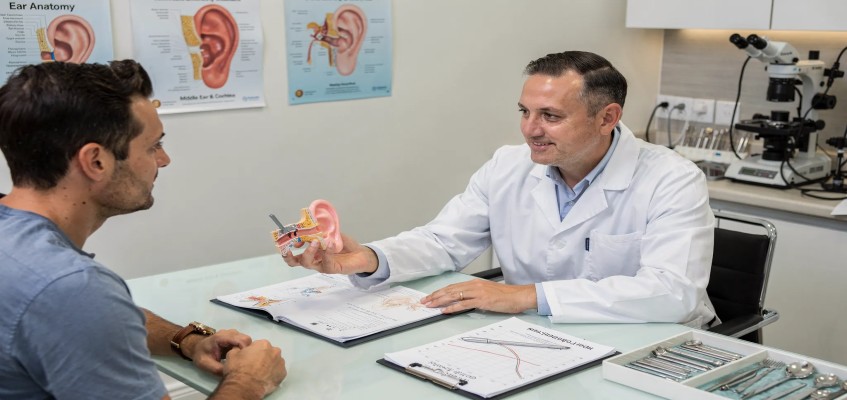
Chronic ear discharge is not normal. Cortical mastoidectomy with tympanoplasty is a surgery that removes infected tissue behind the ear and repairs a hole in the eardrum to help stop discharge and improve hearing.
If you have repeated ear infections, a smelly watery discharge or hearing loss that keeps coming back despite medicines, the root problem is often disease in the middle ear and mastoid air cells. This article explains cortical mastoidectomy with tympanoplasty in patient friendly terms, what it treats, what to expect during recovery and how to choose the right surgeon and hospital for safe results.
A practical guide to stopping ear discharge and improving hearing
Why does the ear keep discharging?
Most long lasting ear discharge comes from chronic suppurative otitis media or related conditions where infection persists behind the eardrum. Over time, the infection can damage the eardrum, middle ear bones and the small air cells in the mastoid bone behind the ear.
Common underlying causes your ENT doctor looks for include:
-
A persistent eardrum perforation that does not heal
-
Disease in the mastoid air cells that keeps feeding infection back into the middle ear
-
Cholesteatoma (a skin growth in the middle ear) that can erode bone and cause complications
In many of these cases, cortical mastoidectomy with tympanoplasty is advised to clear the disease and rebuild the sound conduction pathway.
What is cortical mastoidectomy with tympanoplasty?
Cortical mastoidectomy with tympanoplasty combines two goals in one operation.
First, the surgeon opens and cleans the mastoid air cell system to remove infected or diseased tissue. Second, the surgeon repairs the eardrum (and if needed, improves the mechanics of hearing) to help you return to a dry ear with better hearing.
This combination is commonly recommended when there is persistent discharge with mastoid involvement or when a simple eardrum repair alone may not be enough.
The “mastoidectomy” part: clearing the source of infection
In a cortical mastoidectomy, the surgeon works on the mastoid bone behind the ear. Using an operating microscope or endoscope and a fine drill, the diseased air cells are removed and the infected spaces are opened and cleaned.
The aim is to reduce the chance that infection will recur and to create a healthier ear environment for the eardrum repair.
The “tympanoplasty” part: repairing the eardrum and hearing system
Tympanoplasty repairs the eardrum using a small graft, often taken from tissue near the ear (such as temporalis fascia). If the small hearing bones are damaged, your surgeon may also repair or reconstruct them depending on what is found during surgery.
When done for the right indication, cortical mastoidectomy with tympanoplasty can both stop discharge and improve hearing levels over time.
When is cortical mastoidectomy with tympanoplasty recommended?
Your ENT specialist decides based on symptoms, ear examination and investigations. Cortical mastoidectomy with tympanoplasty is often suggested in situations like persistent discharge with a perforated eardrum, mastoid disease seen on imaging, recurrent infections despite proper care or suspected cholesteatoma.
Here is a simple overview of typical indications and expected outcomes.
| Clinical situation | What the doctor may find | How surgery helps |
|---|---|---|
| Recurrent ear discharge | Inflamed middle ear mucosa, persistent perforation | Clears infection source and closes the perforation |
| Hearing loss with chronic infection | Conductive hearing loss on audiogram | Repairs eardrum and may improve sound conduction |
| Mastoid involvement | Diseased mastoid air cells on CT | Removes diseased air cells to reduce recurrence |
| Suspected cholesteatoma | Retraction pocket, debris, foul discharge | Removes disease to protect ear structures |
If you want a deeper Kerala focused overview of options, you can also read Ascent’s guide on Mastoidectomy and Tympanoplasty Surgery in Kerala.
What tests are done before surgery?
Before cortical mastoidectomy with tympanoplasty, your surgeon will confirm the diagnosis, map the disease extent and plan hearing reconstruction.
A typical pre surgery workup can include:
-
Otoscopic or microscopic ear examination
-
Hearing test (pure tone audiometry)
-
Tympanometry when appropriate
-
CT scan of the temporal bone when mastoid disease or cholesteatoma is suspected
-
Culture tests in selected cases with persistent infection
At a specialised centre like Ascent Hospital, advanced diagnostic support helps the surgical team plan safely, especially when disease is long standing.
What happens on the day of surgery?
Cortical mastoidectomy with tympanoplasty is usually performed under general anaesthesia. The surgeon commonly makes an incision behind the ear or uses an approach based on disease extent. The mastoid is cleaned first, then the eardrum is repaired using a graft.
Many patients ask whether this is a long hospital stay. In selected patients, it may be done as a day care ENT surgery, while others may need observation depending on infection status, extent of work and general health.
If you are dealing with severe pain, fever or sudden worsening symptoms, choose a hospital that can handle urgent ENT needs. Ascent provides 24/7 ENT emergency care, which is important when complications of chronic ear disease are suspected.
Recovery after cortical mastoidectomy with tympanoplasty
Recovery is a step by step process because the ear needs time to heal and the graft needs time to settle.
In general:
-
Mild discomfort around the incision is common for a few days
-
Ear packing may be placed and removed during follow up
-
Discharge typically reduces as the infection source is cleared
-
Hearing improvement is often assessed several weeks after healing, not immediately
Your ENT team will give personalized instructions. Common aftercare guidance includes:
-
Keep the ear dry while bathing
-
Use ear drops only as prescribed
-
Avoid nose blowing forcefully
-
Attend follow up visits for suction cleaning and graft checks
If you also have scarring or calcium deposits on the eardrum, ask your surgeon whether it affects repair choices. This related topic is explained in Tympanosclerosis Treatment: Medical & Surgical Options.
Will my hearing improve after surgery?
Many patients notice better hearing once the eardrum is healed and the middle ear is healthy. The degree of improvement depends on the condition of the hearing bones, how long the infection was present and whether there is any inner ear involvement.
Your audiogram before surgery helps set expectations. Your surgeon may repeat hearing tests after healing to document the benefit of cortical mastoidectomy with tympanoplasty.
Can ear discharge come back?
The goal of cortical mastoidectomy with tympanoplasty is to create a dry safe ear. Recurrence is less likely when disease is fully cleared and post operative care is followed, but it can still happen in some conditions, especially if cholesteatoma is present or follow up is missed.
Risks and safety considerations
Every surgery has risks. With experienced hands and proper planning, complications are uncommon but it is important to understand possibilities.
Potential risks your surgeon will discuss include bleeding, infection, dizziness, change in taste, tinnitus, delayed graft healing and rarely facial nerve weakness. Hearing may not improve in every case and in rare situations may worsen.
Choosing a specialised team in otology reduces risk because temporal bone surgery requires precision. If you want to know who typically handles complex ear cases, explore Otology and Neurotology.
Choosing the right hospital for cortical mastoidectomy with tympanoplasty in Kerala
Outcomes depend on accurate diagnosis, surgical expertise and follow up. If you are searching for the best ENT Hospital in Kerala, look for a dedicated ENT specialty centre with strong infection control, modern microscopes, imaging support and experienced surgeons.
Ascent ENT Hospital is Kerala’s first ISO and NABH accredited ENT specialty hospital and provides comprehensive ear, nose and throat care with dedicated services for ear infections, hearing loss and advanced ear surgeries.
If you are looking for local access, you can consult at:
For patients who want clinician specific guidance, start with resources like Best Doctor for Ear Infection in Kerala and ENT services across locations such as ENT Specialist in Calicut. Many patients also search for a best ENT surgeon in kerala or best ear surgeon in Kerala when planning cortical mastoidectomy with tympanoplasty.
Conclusion: stop the discharge, protect the ear, rebuild hearing
Cortical mastoidectomy with tympanoplasty is designed to treat the root cause of chronic ear discharge by clearing mastoid disease and repairing the eardrum. For the right patient, it can create a dry ear, reduce infection recurrence and support meaningful hearing improvement after healing.
If you have ongoing discharge, a persistent eardrum perforation or hearing loss that is affecting daily life, early specialist evaluation matters. Book a consultation at Ascent Hospital and schedule your visit through the contact page to discuss whether cortical mastoidectomy with tympanoplasty is the best option for you.
Share

Our Professionals
 (1) (2).png)
Dr. Sharafudheen. P.K
Chief Consultant ENT & Cochlear Implant Surgeon
MBBS, MS (ENT), DORL DOHNS - RCS Ed (UK)
 (2).jpg)
Dr. Anuradha Varma. M.R
Senior Consultant ENT, Head & Neck Surgeon
MBBS, DLO
.jpeg)
Dr. Bijiraj Vathwam Veettil
Senior Consultant ENT Head & Neck, Sleep Surgeon
MBBS, MS (ENT), Fellowship in Snoring and Sleep apnea Surgeries (Singapore), Fellowship in sinus and skull base surgery
.png)
Dr. Prasanth Parameswaran
Senior Consultant ENT, Head & Neck Surgeon
MBBS, DLO, DNB (ENT), MNAMS, AASC (Specialist - Allergy and Immunotherapy), Fellowship in Snoring and Sleep apnea Surgeries (Singapore).

Dr. Arshad M Razi
Consultant ENT, Head & Neck Surgeon
MBBS, MS (ENT), Fellow in Head & Neck Surgical Oncology
Dr. Deepthi. N.V
Senior Consultant ENT, Head & Neck Surgeon
MBBS, DNB (ENT)

Dr. K Shilpa Nair
ENT Surgeon | Cochlear Implant & Sleep Surgery Specialist
MBBS, MS, DNB, MRCS(Eng), Post doctoral Fellowship in Implantation Otology


Dr. Nibi Shajahan
Consultant ENT, Head & Neck Surgeon
MBBS, MS (ENT), Fellowship in Snoring and Sleep apnea Surgeries (Singapore). Trained in Allergy and Immunotherapy




Dr.Anand Krishnan
Consultant ENT, Head and Neck Surgeon
MBBS ,DLO ,DNB ENT ,MRCS (ENGLAND)




Dr. Seshadri Ganesh. A.L
Senior Consultant Anaesthesiologist
MBBS, DCH, MD, DIP.N.B




Mr. Prasanth. N.P
Senior Audiologist & Speech Language Pathologist
BASLP, MASLP, MSc (Psy)

Ms. Chinju Johny
Audiologist & Speech Language Pathologist
BASLP, MSc (Audiology)



Our Patient Stories
View All Testimonials