Blogs
Can a Benign Thyroid Nodule Become Malignant? Signs to Watch For
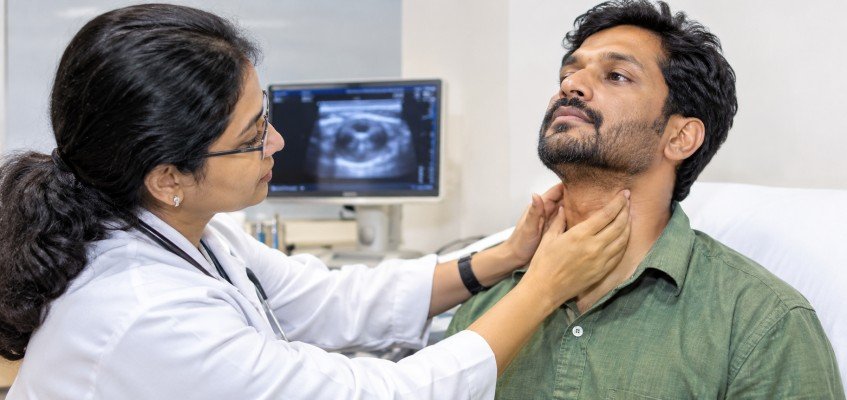
A benign thyroid nodule is a non-cancerous lump that develops in the thyroid gland. When people ask “can a benign thyroid nodule become malignant?”, they are usually asking whether a nodule that was found to be harmless can later turn into thyroid cancer.
In most cases a truly benign thyroid nodule stays benign. However a biopsy does not examine every cell in a nodule so a small number of cancers can be missed at the first evaluation. This is why ultrasound follow-up matters especially when a nodule grows or develops suspicious features.
If you have recently been told that you have a thyroid nodule, it is normal to have questions about what happens next. Information about Throat Head and Neck conditions can also help you understand why proper assessment of a neck lump should not be ignored.
Can a Benign Thyroid Nodule Become Malignant?
The short answer is that a confirmed benign nodule does not usually simply turn into cancer. The bigger concern is that a nodule labelled benign after an initial biopsy may rarely have an area of cancer that was not captured in the sample. Experts note that the risk of overlooking cancer after a benign biopsy is generally less than 3%.
So when someone asks “can a benign thyroid nodule become malignant”, it is important to understand what “benign” means in the first place.
A benign biopsy result means that the cells collected from the nodule looked non-cancerous under a microscope. It does not mean that the nodule needs to be forgotten forever.
Some nodules remain the same size for years. Others become larger without being cancerous. In fact growth alone does not prove that a thyroid nodule is malignant. Doctors usually look at the growth together with ultrasound appearance and other clinical findings.
This is where regular follow-up becomes useful rather than worrying about every small change.
Why Do a Benign Nodule Need Follow-Up?
A thyroid nodule may be discovered during a routine neck examination or unexpectedly during an ultrasound or another scan. Most thyroid nodules are not cancerous and many do not cause any symptoms.
If the nodule has a benign fine needle aspiration result, your doctor may recommend follow-up ultrasound. The timing depends on the nodule's appearance, size and other risk factors.
Studies classify thyroid nodules based on ultrasound features such as composition, echogenicity, shape, margins and calcifications. Different risk categories have different recommendations for follow-up or biopsy.
If you are trying to understand what examination may be suitable for a neck or throat concern, you can also read about ENT Throat Endoscopy. The test used for a thyroid nodule is different but understanding the wider range of ENT evaluations can make the process less confusing.
Thyroid Nodules: When to Worry
One of the most common questions after a benign result is about thyroid nodules when to worry.
There is no single change that automatically means cancer. Still, some findings deserve another medical assessment.
| Change or symptom | Why it may need attention |
|---|---|
| Noticeable increase in nodule size | May lead to repeat ultrasound or biopsy |
| New or persistent neck lump | Needs assessment rather than assuming it is harmless |
| Difficulty swallowing | A large nodule may press on nearby structures |
| Difficulty breathing | Larger thyroid nodules can sometimes affect the airway |
| Persistent hoarseness | Can occur when nearby structures or nerves are affected |
| New suspicious ultrasound features | May change the need for further testing |
| Enlarged neck lymph nodes | Can be relevant when assessing possible thyroid cancer |
These symptoms do not automatically mean that the nodule is cancerous. Several other thyroid and neck conditions can cause similar problems. Experts also note that thyroid cancer may present with a neck lump, trouble swallowing, breathing difficulty or hoarseness.
What Changes in a Benign Nodule Should Be Checked?
1. The nodule gets noticeably larger
Growth is one reason doctors may recommend another ultrasound or biopsy. But this needs some context.
A nodule can grow and still be benign. Research found that most benign nodules either remained stable or grew slowly during follow-up.
Doctors therefore do not usually judge the risk from size alone. They consider the amount of growth and the ultrasound pattern together.
2. The ultrasound appearance changes
Sometimes the more important issue is not how quickly the nodule grows but whether its ultrasound features become more suspicious.
Ultrasound can look at the nodule's shape, margins, composition and areas of calcification. Systems such as ACR TI-RADS help doctors use these features to estimate risk and decide whether a biopsy or follow-up scan is appropriate.
This is another reason why simply touching the lump at home cannot tell you whether it is becoming malignant.
3. New symptoms appear
Most thyroid nodules do not cause symptoms. A larger nodule may sometimes cause pressure in the neck or difficulty swallowing. Hoarseness or breathing problems should also be assessed rather than being automatically blamed on the existing benign nodule.
If you need help understanding which ENT assessment may be appropriate, the guide on How to Choose the Best ENT for Treatment may be useful.
How Doctors Check Whether a Nodule is Still Benign
The first step is usually a clinical examination along with thyroid ultrasound. Blood tests may also be performed to check thyroid function but normal thyroid hormone levels do not by themselves rule out thyroid cancer.
When a biopsy is needed, a fine needle aspiration is commonly used. A thin needle removes cells from the nodule and those cells are examined by a pathologist.
The biopsy result is generally placed into categories such as benign, malignant, suspicious or indeterminate. A benign result has a low risk of malignancy, while an indeterminate result means that the cells cannot be confidently classified as benign or cancerous.
This is important when asking can a benign thyroid nodule become malignant because sometimes the real issue is not transformation at all. It may be an initial sampling limitation or a nodule that has developed new concerning characteristics.
What Happens If a Benign Nodule Grows?
A growing nodule does not automatically mean that surgery is needed. Your doctor may first compare the current ultrasound with earlier scans. If the growth is significant or new suspicious features have appeared, another fine needle aspiration may be considered.
The experts explain that benign nodules can be followed with ultrasound and that repeat biopsy may be needed when a nodule grows or develops worrisome ultrasound characteristics.
For larger nodules there can be additional uncertainty. A summary of research on nodules measuring 4 cm or more reported that some cancers were missed by biopsy in that particular study. This does not mean every large benign nodule is cancerous, but it shows why management of large nodules may need individual assessment.
Patients looking for an ENT specialist in Kerala can discuss their symptoms and previous scan or biopsy reports with an appropriate specialist before deciding on further testing.
Risk Factors That May Matter
The presence of a benign thyroid nodule does not mean that a person will develop thyroid cancer. However doctors may consider certain background factors when assessing a thyroid lump.
These can include:
-
Previous significant radiation exposure involving the head or neck
-
A family history of thyroid cancer
-
Certain inherited conditions
-
Age and other clinical factors
-
Suspicious findings on ultrasound
-
Enlarged lymph nodes in the neck
Study identifies high-dose radiation exposure and family history among factors associated with increased thyroid cancer risk.
This is why two people with thyroid nodules that are the same size may not necessarily receive exactly the same follow-up plan.
Can a Benign Thyroid Nodule Become Malignant Without Symptoms?
Yes, a thyroid cancer can sometimes have very few or no obvious symptoms in its early stages. That is why waiting for pain or a visible change in the neck is not a good substitute for recommended follow-up.
At the same time, this should not create unnecessary fear. Most thyroid nodules are benign and a benign biopsy result is generally reassuring.
The practical approach is simple: keep your ultrasound appointments, compare new scans with previous ones and speak with your doctor if you notice a new lump or change in symptoms.
For people who need specialist evaluation, Ascent ENT hospital Perinthalmanna provides access to ENT and head and neck care.
When Should You See an ENT Specialist?
You should consider medical evaluation if you notice a new neck lump or if an existing thyroid nodule seems to be changing.
It is particularly important to seek assessment if there is persistent difficulty swallowing, breathing difficulty or unexplained hoarseness. These symptoms can have many causes but should not be ignored.
An ENT clinic in Kerala can help assess neck and throat-related symptoms and determine whether further investigation is needed.
Patients who prefer a local hospital can also access Ascent ENT Hospital in Calicut for ENT and head and neck services.
Final Thoughts
So can a benign thyroid nodule become malignant? In most cases a truly benign nodule does not simply turn into cancer. The more practical concern is that a small cancer can occasionally be missed during the first biopsy or that a nodule may develop changes that need another assessment.
This is why thyroid nodules when to worry is less about one particular symptom and more about changes over time. An increase in size, suspicious ultrasound features or symptoms such as swallowing difficulty and persistent hoarseness should be discussed with a doctor.
Ascent Hospital provides ENT and head and neck care for patients who need further evaluation. You can also visit Ear Nose Throat Head and Neck Surgery services for more information about related conditions.
Ascent also has locations including Ascent ENT hospital Palakkad. If you are looking for the best ENT doctor in Kerala or considering specialist evaluation, bring your previous ultrasound and biopsy reports to the consultation. Ascent Hospital aims to provide specialist ENT care as the best ENT hospital in Kerala with attention to individual patient needs.
If you have a thyroid or neck concern and want to discuss it with a specialist, you can schedule a consultation with Ascent Hospital
Frequently Asked Questions
1. Does growth mean a thyroid nodule is cancerous?
No. Benign nodules can grow too. Significant growth or new suspicious ultrasound findings may lead to another evaluation or biopsy.
2. How often should a benign thyroid nodule be checked?
The timing depends on its ultrasound appearance, size and clinical risk. Your doctor may recommend a follow-up ultrasound within a particular period and adjust future monitoring based on the findings.
3. What are the warning signs of thyroid cancer?
A new or enlarging neck lump, difficulty swallowing, breathing problems or persistent hoarseness can be warning signs. These symptoms can also occur with non-cancerous conditions so they need medical assessment rather than self-diagnosis.
4. Can a benign biopsy be wrong?
A benign biopsy is generally reassuring but it is not perfect because only a sample of cells is examined.
Share
 (1) (2).png)

Our Professionals
Dr. Sharafudheen. P.K
Chief Consultant ENT & Cochlear Implant Surgeon
MBBS, MS (ENT), DORL DOHNS - RCS Ed (UK)
 (2).jpg)
Dr. Anuradha Varma. M.R
Senior Consultant ENT, Head & Neck Surgeon
MBBS, DLO
.jpeg)
Dr. Bijiraj Vathwam Veettil
Senior Consultant ENT Head & Neck, Sleep Surgeon
MBBS, MS (ENT), Fellowship in Snoring and Sleep apnea Surgeries (Singapore), Fellowship in sinus and skull base surgery
.png)
Dr. Prasanth Parameswaran
Senior Consultant ENT, Head & Neck Surgeon
MBBS, DLO, DNB (ENT), MNAMS, AASC (Specialist - Allergy and Immunotherapy), Fellowship in Snoring and Sleep apnea Surgeries (Singapore).

Dr. Arshad M Razi
Consultant ENT, Head & Neck Surgeon
MBBS, MS (ENT), Fellow in Head & Neck Surgical Oncology

Dr. Deepthi. N.V
Senior Consultant ENT, Head & Neck Surgeon
MBBS, DNB (ENT)


Dr. K Shilpa Nair
ENT Surgeon | Cochlear Implant & Sleep Surgery Specialist
MBBS, MS, DNB, MRCS(Eng), Post doctoral Fellowship in Implantation Otology


Dr. Nibi Shajahan
Consultant ENT, Head & Neck Surgeon
MBBS, MS (ENT), Fellowship in Snoring and Sleep apnea Surgeries (Singapore). Trained in Allergy and Immunotherapy



Dr.Anand Krishnan
Consultant ENT, Head and Neck Surgeon
MBBS ,DLO ,DNB ENT ,MRCS (ENGLAND)




Dr. Seshadri Ganesh. A.L
Senior Consultant Anaesthesiologist
MBBS, DCH, MD, DIP.N.B




Mr. Prasanth. N.P
Senior Audiologist & Speech Language Pathologist
BASLP, MASLP, MSc (Psy)

Ms. Chinju Johny
Audiologist & Speech Language Pathologist
BASLP, MSc (Audiology)



Our Patient Stories
View All Testimonials