Blogs
Stapedial Otosclerosis: Causes, Symptoms, Diagnosis and Treatment Options for Hearing Loss
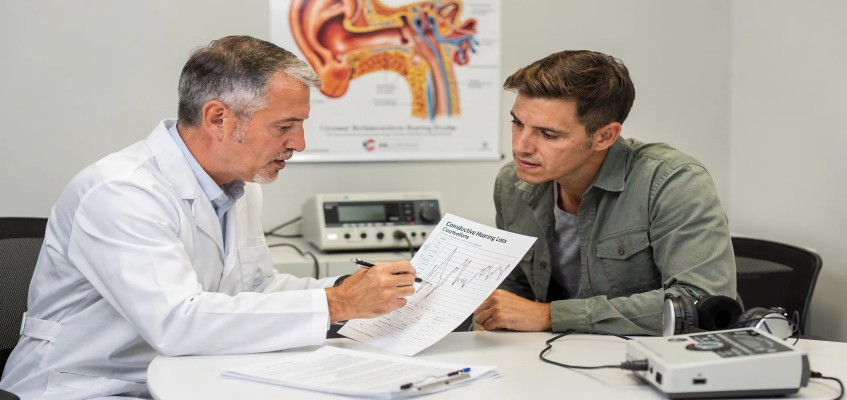
Stapedial otosclerosis is a condition where a tiny bone in the middle ear becomes less mobile over time. When that bone cannot move well sound vibrations do not pass efficiently to the inner ear which leads to gradual hearing loss.
Stapedial otosclerosis most often affects adults and it can be frustrating because it may start in one ear then progress to both. In this guide you will learn what causes it, what symptoms to watch for, how doctors confirm the diagnosis and what treatment options can restore hearing including modern hearing aids and stapes surgery.
The goal is to help you recognise the problem early and know what to expect from evaluation and care at a specialised ENT centre.
Understanding stapedial otosclerosis and hearing loss
In the middle ear there are three small bones that transmit sound. The last bone is the stapes which acts like a small piston at the oval window of the inner ear. In stapedial otosclerosis abnormal bone remodelling occurs around the stapes. As the stapes become fixed, sound transmission drops and conductive hearing loss develops.
Although the exact pattern varies, stapedial otosclerosis is a well recognised cause of progressive hearing loss in otherwise healthy adults.
What causes stapedial otosclerosis?
Stapedial otosclerosis is usually linked to a combination of hereditary factors and bone metabolism changes. Many patients report a family history of similar hearing loss. Researchers have also explored immune and viral triggers but in day to day practice it is often considered a multifactorial condition.
Commonly discussed contributors include:
-
Family history of otosclerosis
-
Hormonal influences (symptoms may become noticeable or progress during adulthood)
-
Abnormal bone remodelling around the stapes
Stapedial otosclerosis is not caused by ear wax or routine ear infections. That is why an ENT assessment matters when hearing declines gradually.
Symptoms and early warning signs
Stapedial otosclerosis typically causes slowly progressive hearing loss. Many people first notice trouble hearing low pitched voices or difficulty following conversations in noisy places.
What does hearing loss feel like in stapedial otosclerosis?
Most patients describe a gradual reduction in hearing rather than sudden loss. You may find yourself increasing the TV volume or frequently asking others to repeat.
Can stapedial otosclerosis cause ringing in the ear?
Yes, tinnitus is common. It can present as ringing, buzzing or a humming sound. Tinnitus alone does not confirm stapedial otosclerosis but in combination with progressive conductive hearing loss it supports the clinical picture.
Can stapedial otosclerosis cause dizziness or imbalance?
Most people do not have prominent vertigo from stapedial otosclerosis. Some patients can report mild imbalance or positional discomfort especially if there is inner ear involvement. If you have significant dizziness it is important to rule out other causes at an ENT clinic.
If you are looking for a trusted ENT clinic in Kerala with comprehensive diagnostics and subspecialty care you can book an evaluation at Ascent.
How doctors diagnose stapedial otosclerosis
A careful diagnosis is essential because other problems can mimic conductive hearing loss. Your ENT specialist will combine symptoms history, ear examination and hearing tests.
Typical steps include:
-
Clinical history (duration progression family history tinnitus)
-
Otoscopic exam to check the ear canal and eardrum
-
Audiology tests to measure the type and degree of hearing loss
-
Imaging in selected cases
The following table summarises tests commonly used when stapedial otosclerosis is suspected.
| Test | What it checks | What it may show in stapedial otosclerosis | Why it matters |
|---|---|---|---|
| Pure tone audiometry (PTA) | Hearing thresholds by frequency | Conductive hearing loss pattern and an air bone gap | Confirms degree of hearing loss and guides treatment |
| Tympanometry | Middle ear pressure and eardrum mobility | Often normal middle ear pressure with reduced stapes movement suggested indirectly | Helps rule out fluid and eardrum problems |
| Acoustic reflex testing | Stapedius reflex pathway | Reflexes often absent | Supports stapes fixation suspicion |
| CT scan (selected cases) | Bony anatomy of middle ear and otic capsule | May show otosclerotic foci | Helps in complex cases or surgical planning |
To get a definitive plan you should consult a specialist who routinely manages ear surgery and hearing rehabilitation. If you are seeking a best ENT surgeon in Kerala for expert evaluation and counselling Ascent ENT Hospital Kerala offers dedicated ENT services.
Treatment options for stapedial otosclerosis
Treatment depends on how much hearing is affected by your lifestyle needs and whether you prefer non surgical options. For many patients stapedial otosclerosis is treatable with excellent functional outcomes.
When is observation reasonable?
If hearing loss is mild and daily communication is not affected your doctor may advise regular follow up with audiograms. Because stapedial otosclerosis can progress, monitoring helps you choose the right time for hearing aids or surgery.
Hearing aids for stapedial otosclerosis
Modern digital hearing aids can significantly improve hearing in conductive loss. They do not fix the stapes movement but they amplify sound to compensate.
Hearing aids may be a good fit if:
-
You want a non surgical option
-
You have medical reasons to avoid surgery
-
Hearing loss is present in both ears and you want balanced hearing support
A specialised ENT hospital can coordinate audiology fitting and medical oversight together. Ascent Hospital is recognised as a best ENT Hospital in Kerala for comprehensive ear care including diagnostic testing and hearing aid guidance.
Medicines and supplements
There is no medication that reliably reverses stapes fixation in stapedial otosclerosis. Your ENT doctor may treat associated issues such as ear infections or Eustachian tube problems if present but that is separate from otosclerosis itself.
Stapes surgery (stapedectomy or stapedotomy)
For eligible patients surgery can restore the sound pathway by bypassing the fixed stapes with a tiny prosthesis. Many people refer to this broadly as stapedectomy although surgeons may perform stapedotomy depending on technique and anatomy.
Stapes surgery is considered when:
-
There is a confirmed conductive component on audiometry
-
The middle ear and eardrum are healthy
-
You understand the benefits and risks
-
You prefer a potentially long term correction over ongoing amplification
If you are exploring surgery it is sensible to consult a team that performs these procedures regularly. For expert surgical care you can read more about the Best Stapedectomy surgeon in kerala at Ascent.
What results can you expect after stapes surgery?
Outcomes vary by case but the aim is to reduce the air bone gap and improve speech understanding. Many patients notice meaningful hearing improvement after the recovery period.
How long does recovery take?
Most people resume light activity within days based on surgeon advice. Hearing often improves gradually as the ear heals. Your ENT team will schedule follow ups and repeat hearing tests.
What are the risks you should discuss?
Any ear surgery has risks. Your surgeon will counsel you about possible complications such as persistent hearing loss, tinnitus dizziness, taste disturbance or eardrum issues. The risk profile depends on individual anatomy and surgeon assessment. Shared decision making is important for stapedial otosclerosis because your priorities may differ from someone else with the same audiogram.
When should you see an ENT specialist?
Do not wait if you have progressive hearing loss in one or both ears especially with tinnitus. Early evaluation helps confirm whether the cause is stapedial otosclerosis or another treatable condition.
Seek urgent care if hearing loss is sudden or you have severe vertigo ear pain or neurological symptoms.
For comprehensive assessment and 24/7 support you can connect with Ascent Hospital which is Kerala’s first ISO and NABH accredited ENT specialty hospital with advanced diagnostics and expert ENT surgeons.
Why choose Ascent for evaluation and treatment?
Stapedial otosclerosis requires accurate diagnosis, detailed counselling and precise execution if surgery is planned. Ascent ENT Hospital Kerala provides specialised ear care with modern diagnostic imaging and dedicated ENT services. Patients also benefit from coordinated care pathways that can include audiology support, day care ENT surgeries and ongoing follow up.
If you are deciding where to get help, start with a consultation at a Best ENT Clinic so your options are explained clearly based on your hearing test results.
Conclusion
Stapedial otosclerosis is a common cause of progressive conductive hearing loss due to reduced movement of the stapes bone. Key symptoms include gradual hearing decline and tinnitus while diagnosis is confirmed through ENT evaluation and hearing tests. Treatment can include observation hearing aids or stapes surgery depending on severity needs and suitability.
If you suspect stapedial otosclerosis or you want a specialist opinion on hearing aids or stapedectomy, schedule a visit with Ascent, the best ENT Hospital in Kerala. To speak with the team and plan your next steps use the contact page to schedule a consultation.
Share



Our Professionals
 (1) (2).png)
Dr. Sharafudheen. P.K
Chief Consultant ENT & Cochlear Implant Surgeon
MBBS, MS (ENT), DORL DOHNS - RCS Ed (UK)
 (2).jpg)
Dr. Anuradha Varma. M.R
Senior Consultant ENT, Head & Neck Surgeon
MBBS, DLO
.jpeg)
Dr. Bijiraj Vathwam Veettil
Senior Consultant ENT Head & Neck, Sleep Surgeon
MBBS, MS (ENT), Fellowship in Snoring and Sleep apnea Surgeries (Singapore), Fellowship in sinus and skull base surgery
.png)
Dr. Prasanth Parameswaran
Senior Consultant ENT, Head & Neck Surgeon
MBBS, DLO, DNB (ENT), MNAMS, AASC (Specialist - Allergy and Immunotherapy), Fellowship in Snoring and Sleep apnea Surgeries (Singapore).

Dr. Arshad M Razi
Consultant ENT, Head & Neck Surgeon
MBBS, MS (ENT), Fellow in Head & Neck Surgical Oncology

Dr. Deepthi. N.V
Senior Consultant ENT, Head & Neck Surgeon
MBBS, DNB (ENT)


Dr. K Shilpa Nair
ENT Surgeon | Cochlear Implant & Sleep Surgery Specialist
MBBS, MS, DNB, MRCS(Eng), Post doctoral Fellowship in Implantation Otology


Dr. Nibi Shajahan
Consultant ENT, Head & Neck Surgeon
MBBS, MS (ENT), Fellowship in Snoring and Sleep apnea Surgeries (Singapore). Trained in Allergy and Immunotherapy




Dr.Anand Krishnan
Consultant ENT, Head and Neck Surgeon
MBBS ,DLO ,DNB ENT ,MRCS (ENGLAND)




Dr. Seshadri Ganesh. A.L
Senior Consultant Anaesthesiologist
MBBS, DCH, MD, DIP.N.B




Mr. Prasanth. N.P
Senior Audiologist & Speech Language Pathologist
BASLP, MASLP, MSc (Psy)

Ms. Chinju Johny
Audiologist & Speech Language Pathologist
BASLP, MSc (Audiology)



Our Patient Stories
View All Testimonials