Blogs
Nasal Turbinates: Causes of Enlargement & Treatment Options
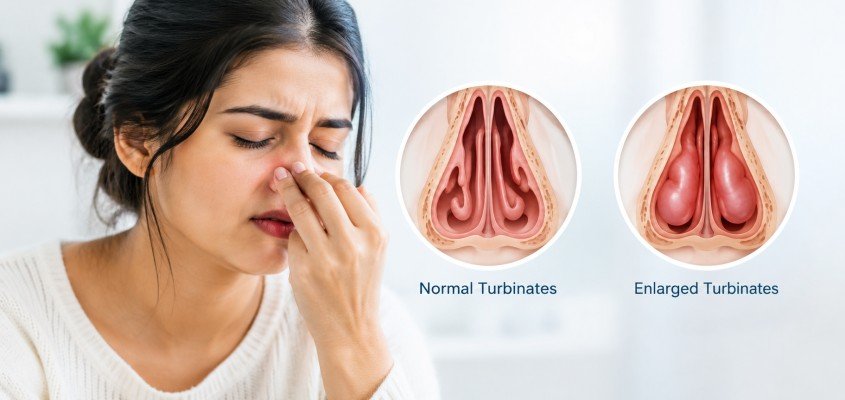
Nasal turbinates are small structures inside your nose that help warm, filter and moisten the air you breathe. They are covered with soft tissue, which can swell or shrink depending on what your nose needs at the time.
Most of the time, you probably don't even notice them. But when the turbinate tissue stays swollen for too long, breathing through the nose can become difficult. Allergies, infections, irritation and structural problems inside the nose can all play a part. An ENT clinic in Kerala can help evaluate persistent nasal congestion and identify its underlying cause.
In this guide, we'll look at what nasal turbinates are, what they actually do, why they become enlarged, the symptoms they can cause and importantly, what can be done about them. Ascent Hospital provides ENT care for patients experiencing nasal and sinus-related problems.
What are Nasal Turbinates?
So, what are turbinates and why do we even have them? Turbinates are curved structures found along the sides of the nasal passages. There are three main pairs: the superior, middle and inferior turbinates. Among these, the inferior turbinates are particularly important when it comes to airflow and nasal congestion.
Their job is fairly practical. As you breathe in, the turbinates help warm and humidify the air before it moves deeper into your respiratory system. They also help trap dust, allergens and other tiny particles in the mucus lining of the nose.
Turbinate tissue naturally changes size throughout the day. One side of your nose may feel a little more open while the other feels slightly blocked. This is part of the normal nasal cycle, and most people don't notice it.
The issue is when the tissue stays swollen for a long period. If you regularly deal with blocked nasal breathing, a structural problem may also be involved. A bent or displaced septum, for example, can affect airflow and make congestion feel worse. This is discussed in more detail in Deviated Nasal Septum: Symptoms, Causes & Treatment.
What are Turbinates in the Nose Supposed to Do?
It is easy to think of turbinates as something that simply gets in the way whenever your nose is blocked. Actually, they have an important job.
The moist lining around the turbinates helps condition the air you breathe. Their curved shape creates a bit of turbulence inside the nasal passage, allowing the air to stay in contact with the nasal lining for longer. This helps warm and humidify it.
Turbinates also support the nose's natural filtering system. Dust, allergens and other particles can get trapped in mucus before the air continues into the airway.
So, healthy turbinates are useful. Treatment isn't usually about removing them completely. The aim is to reduce excessive swelling while keeping enough healthy tissue in place so the nose can continue doing its job.
This becomes particularly important when someone is being assessed at the best ENT hospital in Kerala for long-term nasal blockage. The cause needs to be understood first, rather than simply treating the symptom.
What Causes Enlarged Nasal Turbinates?
There isn't one single cause of enlarged nasal turbinates. In fact, several different conditions can make this tissue swollen or inflamed for a long time.
Allergies
Allergic rhinitis is one of the most common reasons. Pollen, dust mites, mould, pet dander and other allergens can trigger inflammation inside the nose.
Along with congestion, people may experience sneezing, itching, watery discharge or a constantly runny nose. Some people notice these symptoms only during certain seasons, while others deal with them throughout the year.
When allergies seem to be driving the problem, finding the specific trigger can make treatment much more useful. Allergy Testing & Treatment may help identify what is causing repeated nasal inflammation and allow the treatment plan to be more specific.
Nasal Infections
A cold or another respiratory infection can temporarily cause the turbinates to swell. Usually, the tissue settles down once the infection gets better.
But if infections happen frequently or inflammation continues even after the infection has cleared, nasal congestion can become a more persistent problem.
Deviated Nasal Septum
The septum is the structure that separates the two sides of your nose. When it is significantly bent or displaced, airflow can become uneven.
Sometimes, the turbinate on the opposite side becomes larger as the nose attempts to compensate for the difference in airflow. This is one reason why turbinate enlargement and a deviated septum can appear together.
For people trying to understand Deviated Septum and Allergic Rhinitis Explained, it is also worth remembering that more than one problem can exist at the same time. A person may have both a structural issue and ongoing allergic inflammation.
Environmental Irritants
Smoke, air pollution, strong perfumes and chemical fumes can irritate the nasal lining. Regular exposure can keep the nose inflamed and congested.
This can be particularly frustrating because the trigger isn't always obvious. Someone may simply feel that their nose is blocked most of the time without realising that their surroundings are contributing to it.
Hormonal Changes
Hormonal changes can also affect the nose. Pregnancy, for instance, may cause nasal congestion even when there is no cold or allergy involved. This is sometimes referred to as pregnancy rhinitis.
Overuse of Decongestant Sprays
Some nasal decongestant sprays provide quick relief, which can make them tempting to use repeatedly. But using them for longer than recommended can cause rebound congestion.
In simple terms, the nose can become even more blocked when the effect of the spray wears off. So, if you find yourself relying on these sprays regularly, it is worth discussing the problem with an ENT doctor in Kerala rather than continuing indefinitely.
Symptoms of Enlarged Turbinates
Symptoms can be quite different from one person to another. One person may mainly notice nasal blockage, while another may feel that they simply cannot get enough air through their nose.
Common symptoms include:
-
Persistent nasal blockage
-
Difficulty breathing through the nose
-
A feeling of pressure or fullness inside the nose
-
Snoring
-
Dry mouth after sleeping
-
Reduced sense of smell
-
Nasal congestion that gets worse at night
-
Frequent sinus-related symptoms
-
Poor-quality sleep
Sometimes, enlarged turbinates occur alongside other nasal or sinus conditions. If blockage keeps returning along with facial pressure, thick nasal discharge or changes in smell, it may be worth having the sinuses checked as well.
A proper evaluation for Rhinology and Sinus Diseases treatment can help determine whether the symptoms are coming from the turbinates, the sinuses, a deviated septum or a combination of these issues.
Can Enlarged Turbinates Cause Ear Problems?
A common question is whether enlarged turbinates can cause ear problems. They can sometimes contribute indirectly.
The nose and middle ear are connected through the Eustachian tubes. When the tissues around the nose and upper airway become inflamed or congested, Eustachian tube function may be affected in some people. This can lead to sensations such as ear fullness, pressure, muffled hearing or popping.
That said, enlarged turbinates aren't automatically the reason behind ear symptoms. Ear problems have many possible causes. If the pressure or hearing changes continue, an ENT examination is a better option than simply assuming it is connected to the nose.
How are Enlarged Nasal Turbinates Diagnosed?
An ENT specialist in Kerala will usually begin by asking about your symptoms and medical history. They may want to know how long the nasal blockage has been present, whether it gets worse at certain times, whether you have allergies and if you regularly experience sinus infections.
Then comes an examination of the nose. In some cases, nasal endoscopy may be recommended. This allows the doctor to look further inside the nasal passages and check for enlarged turbinates, a deviated septum, polyps or other causes of obstruction.
A CT scan may also be considered if there is a concern about sinus disease or another structural issue.
Nasal polyps, for example, can also cause ongoing nasal obstruction. If you've wondered What Are Polyps in the Nose?, they are non-cancerous growths that can develop in the lining of the nose or sinuses and may interfere with normal airflow.
The important thing is that not every blocked nose has the same cause. Diagnosis helps avoid treating the wrong problem.
Enlarged Turbinates Treatment Options
The right treatment depends on why the turbinates are enlarged and how much they are affecting breathing.
1. Treating the Underlying Allergy
If allergies are causing turbinate swelling, controlling the allergy itself is an important part of treatment.
Depending on the symptoms, an ENT specialist may recommend allergy medicines, saline rinses, nasal sprays or allergy-specific treatment.
Simply trying to unblock the nose without addressing the allergy may only provide short-term relief. The swelling can come back because the trigger is still there.
2. Saline Nasal Rinses
Saline rinses can help remove mucus, allergens and irritants from the nasal passages. They can also help keep the nasal lining moist.
They are fairly simple, but they should be prepared and used correctly. Using contaminated water or an improperly cleaned device can introduce unwanted organisms into the nose, so this part shouldn't be overlooked.
3. Medications
Depending on the underlying cause, doctors may recommend corticosteroid nasal sprays or other medicines to reduce inflammation.
These medicines don't physically remove the turbinate tissue. Instead, they reduce swelling, which can create more room for air to move through the nose.
For some people, this is enough to control the symptoms. Others may continue to have significant obstruction despite medical treatment.
4. Turbinate Reduction Procedures
When medication isn't providing enough relief and the turbinates remain significantly enlarged, an ENT specialist may discuss turbinate reduction.
The goal is fairly straightforward: create more space for airflow while preserving as much healthy turbinate tissue as possible.
Different techniques can be used depending on the person's nasal anatomy, the amount of enlargement and the doctor's assessment.
5. Surgery for Related Structural Problems
Sometimes enlarged turbinates aren't the whole story. A significantly deviated septum, for example, can restrict airflow even if the turbinate swelling is treated. In these cases, treatment may involve correcting the structural problem as well as reducing the enlarged turbinates.
This is why a proper ENT evaluation is useful before deciding on a particular treatment. Treating only one part of the problem may not give the result you were hoping for.
Swollen Turbinates Treatment: What is Right for You?
There isn't one swollen turbinates treatment that works for everybody. If the swelling is mild and related to an allergy or temporary infection, medical treatment may be enough. But when the problem continues for months and starts affecting sleep, exercise or normal breathing, a more detailed assessment may be needed.
Your treatment plan should take into account the cause of the swelling, how severe the obstruction is and whether you have other nasal or sinus conditions.
Sleep is another thing worth paying attention to. People who snore loudly or wake up feeling tired may need to look beyond nasal congestion alone. Enlarged turbinates can sometimes contribute to nasal obstruction associated with sleep-disordered breathing, including Snoring / Obstructive Sleep Apnoea.
If this sounds familiar, an ENT evaluation can help determine whether the problem is mainly nasal or whether other parts of the upper airway are involved.
Treatment Options at a Glance
| Cause or situation | Common approach |
|---|---|
| Allergy-related swelling | Allergy control and nasal medication |
| Temporary infection | Treatment of the infection and supportive care |
| Mild turbinate swelling | Saline rinses and prescribed medication |
| Persistent enlargement | ENT assessment and possible turbinate reduction |
| Enlarged turbinates with deviated septum | Treatment based on both structural problems |
| Ongoing nasal obstruction | Detailed ENT examination and personalised treatment |
When Should You See an ENT Specialist?
Occasional nasal congestion usually isn't something to worry about. A blocked nose during a cold, for example, will often settle on its own.
But if your nose has been blocked for weeks, or the problem keeps returning without any obvious reason, it deserves a closer look. You should consider seeing an ENT specialist if:
-
You regularly breathe through your mouth
-
Nasal blockage affects your sleep
-
You snore heavily
-
Your sense of smell stays reduced
-
Medication gives only temporary relief
-
You frequently experience sinus symptoms
-
You have ongoing ear pressure along with nasal congestion
-
One side of your nose stays blocked most of the time
Choosing the right doctor can make a difference, especially when symptoms have been going on for months. If you're unsure where to begin, How to Choose the Best ENT for Treatment offers some useful things to consider before making a decision.
It's not only about finding a doctor with a long list of qualifications. Experience with the particular problem, diagnostic facilities, treatment options and how clearly the doctor explains your condition all matter.
What to Look for When Choosing an ENT Hospital
If you need ongoing treatment, don't choose a hospital only because it appears at the top of a search result.
Look at the ENT team's experience, the range of conditions they manage and whether the hospital offers the diagnostic and treatment facilities you may need. Accessibility matters too, particularly if your condition requires follow-up visits.
For patients looking for an ENT specialist in Kerala, the location of the hospital can be another practical consideration. Depending on where you live, you may come across options such as Ascent ENT hospital Perinthalmanna, Ascent ENT Hospital in Calicut or Ascent ENT hospital Palakkad.
The better choice is the one that fits your actual treatment needs, not simply the one with the most impressive-sounding description.
Key Takeaways
Nasal turbinates have an important role in keeping the air you breathe warm, moist and filtered. The turbinates themselves aren't the problem. Persistent swelling or enlargement is what can make breathing through the nose difficult.
Allergies, infections, irritation and structural issues such as a deviated septum can all contribute to enlarged turbinates. Depending on the cause, treatment may include saline rinses, medication, allergy management or a turbinate reduction procedure.
If nasal blockage is affecting your sleep, breathing or everyday life, it makes more sense to find out what is causing it rather than repeatedly treating the congestion on your own.
Ascent ENT Hospital provides evaluation and treatment for a range of ENT, nasal and sinus conditions. Patients looking for an ENT specialist in Kerala can discuss persistent nasal obstruction, allergies, sinus problems and related breathing concerns with an experienced ENT team.
If you're trying to find the best ENT surgeon in kerala, take some time to compare the doctor's experience, treatment approach and the facilities available at the hospital.
If you have ongoing nasal obstruction or symptoms that keep returning, consider speaking with an ENT team and getting the problem properly assessed. Schedule your consultation with us now.
Frequently Asked Questions
1. What are nasal turbinates?
Nasal turbinates are structures inside the nose that help warm, humidify and filter the air you breathe. They also help regulate airflow through the nasal passages.
2. What are turbinates in the nose made of?
Turbinates contain bone covered by soft tissue and a moist lining. The tissue contains blood vessels, which allow the turbinates to change size.
3. Are enlarged turbinates dangerous?
Enlarged turbinates are not usually dangerous on their own. However, persistent enlargement can make nasal breathing difficult and may affect sleep, comfort and daily activities.
4. Can enlarged turbinates go back to normal?
It depends on the cause. Swelling caused by a cold or temporary irritation may settle once the trigger goes away. Allergy-related swelling may improve when the allergy is controlled. Long-standing enlargement may need medical or procedural treatment.
5. Does turbinate reduction remove the whole turbinate?
No. The aim of turbinate reduction is generally to decrease excessive tissue and improve airflow while preserving the turbinate's important functions.
6. Can enlarged turbinates cause snoring?
They can contribute to nasal obstruction, which may make snoring worse in some people. However, snoring can have several causes, so persistent or loud snoring should be assessed properly.
Share
 (1) (2).png)


Our Professionals
Dr. Sharafudheen. P.K
Chief Consultant ENT & Cochlear Implant Surgeon
MBBS, MS (ENT), DORL DOHNS - RCS Ed (UK)
 (2).jpg)
Dr. Anuradha Varma. M.R
Senior Consultant ENT, Head & Neck Surgeon
MBBS, DLO
.jpeg)
Dr. Bijiraj Vathwam Veettil
Senior Consultant ENT Head & Neck, Sleep Surgeon
MBBS, MS (ENT), Fellowship in Snoring and Sleep apnea Surgeries (Singapore), Fellowship in sinus and skull base surgery
.png)
Dr. Prasanth Parameswaran
Senior Consultant ENT, Head & Neck Surgeon
MBBS, DLO, DNB (ENT), MNAMS, AASC (Specialist - Allergy and Immunotherapy), Fellowship in Snoring and Sleep apnea Surgeries (Singapore).

Dr. Arshad M Razi
Consultant ENT, Head & Neck Surgeon
MBBS, MS (ENT), Fellow in Head & Neck Surgical Oncology

Dr. Deepthi. N.V
Senior Consultant ENT, Head & Neck Surgeon
MBBS, DNB (ENT)


Dr. K Shilpa Nair
ENT Surgeon | Cochlear Implant & Sleep Surgery Specialist
MBBS, MS, DNB, MRCS(Eng), Post doctoral Fellowship in Implantation Otology


Dr. Nibi Shajahan
Consultant ENT, Head & Neck Surgeon
MBBS, MS (ENT), Fellowship in Snoring and Sleep apnea Surgeries (Singapore). Trained in Allergy and Immunotherapy




Dr.Anand Krishnan
Consultant ENT, Head and Neck Surgeon
MBBS ,DLO ,DNB ENT ,MRCS (ENGLAND)




Dr. Seshadri Ganesh. A.L
Senior Consultant Anaesthesiologist
MBBS, DCH, MD, DIP.N.B




Mr. Prasanth. N.P
Senior Audiologist & Speech Language Pathologist
BASLP, MASLP, MSc (Psy)

Ms. Chinju Johny
Audiologist & Speech Language Pathologist
BASLP, MSc (Audiology)



Our Patient Stories
View All Testimonials