Blogs
How Long Does Post Rhinoplasty Swelling Last?
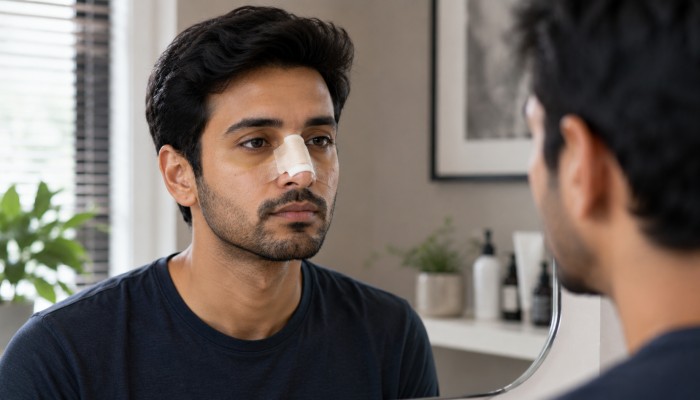
Post Rhinoplasty Swelling is the puffiness and fullness that appears around the nose and nearby facial areas after nose reshaping surgery. Post Rhinoplasty Swelling is a normal part of healing because the tissues need time to recover after surgical changes.
The main question patients ask is not whether swelling will happen but how long it will last. In this guide, we explain the usual swelling timeline, what can make it last longer and when you should seek medical advice. We also look at how careful follow-up with an ENT specialist and facial surgery team can make recovery safer and more predictable.
If you are planning Rhinoplasty Surgery in Kerala or have recently undergone the procedure, understanding the healing process can help you stay calm and make better recovery decisions.
How long does Post Rhinoplasty Swelling usually last?
For most patients, Post Rhinoplasty Swelling improves significantly within the first 2 to 6 weeks. The nose may still look slightly broad, firm or uneven during this stage but the most noticeable swelling around the eyes and upper cheeks usually settles much earlier.
A general timeline looks like this: the first week is when swelling and bruising are usually at their peak. By the second or third week, many patients feel comfortable returning to work or social activities. However, mild swelling at the nasal tip can take 6 months to 1 year to fully settle, especially after more detailed reshaping.
The final result of rhinoplasty is gradual. Even when your nose looks much better after a month, the deeper tissues continue to refine slowly. This is why surgeons often advise patients not to judge the final shape too early.
| Recovery period | What you may notice | What it usually means |
|---|---|---|
| First 3 to 7 days | Swelling, bruising and tightness | Normal early healing phase |
| 2 to 3 weeks | Major puffiness reduces | Most patients look socially comfortable |
| 1 to 3 months | Nose looks more defined but may feel firm | Healing is progressing |
| 3 to 6 months | Tip swelling continues to reduce | Shape becomes clearer |
| 6 to 12 months | Minor swelling settles slowly | Final result becomes more visible |
Why does swelling last longer after rhinoplasty?
Post Rhinoplasty Swelling can last for months because the nose has delicate skin, cartilage, soft tissue and blood vessels. During surgery, these tissues are carefully adjusted. After surgery, the body sends fluid and healing cells to the area, which creates temporary puffiness.
The nasal tip is often the last area to settle. This is because the skin over the tip may be thicker and the tissues in this region heal slowly. Patients with thick nasal skin may notice that definition takes longer to appear compared with patients who have thinner skin.
The type of rhinoplasty also matters. A minor correction may have a shorter swelling period, while complex reshaping, revision surgery or procedures involving both cosmetic and breathing correction may need a longer recovery window. If you are still exploring the procedure, read more about What is a Nose Job and Is a Nose Job the Right Solution for You, to understand better.
What factors affect Post Rhinoplasty Swelling?
Every patient heals differently. Post Rhinoplasty Swelling depends on your body, the surgical technique used and how closely you follow recovery instructions.
Common factors that can influence swelling include:
-
Skin thickness and nasal structure
-
Whether the surgery was primary or revision rhinoplasty
-
The extent of reshaping performed
-
Individual healing response
-
Sleeping position during recovery
-
Salt intake, hydration and general health
-
Accidental pressure or injury to the nose
-
Following or ignoring post-operative instructions
Age, allergies and sinus conditions may also affect comfort during recovery. If you often have nasal blockage, allergic rhinitis or sinus symptoms, your surgeon may assess these issues before recommending rhinoplasty surgery.
How can you reduce Post Rhinoplasty Swelling safely?
You cannot make swelling disappear overnight, but you can support healthy healing. The safest approach is to follow the instructions given by your rhinoplasty surgeon in Kerala rather than trying home remedies without medical advice.
During the first few days, keeping your head elevated can help reduce fluid build-up. Cold compresses may be recommended around the cheeks or eye area, but they should not be pressed directly on the operated nose unless your surgeon says it is safe.
To help manage Post Rhinoplasty Swelling, patients are usually advised to avoid heavy exercise, bending forward, smoking and alcohol during the early recovery period. A balanced diet, enough water and reduced salt intake may also support smoother healing.
Do not massage or press the nose unless your surgeon has specifically instructed you to do so. Unplanned pressure can affect healing tissues and may interfere with the surgical result.
When is swelling normal and when should you call your surgeon?
Mild to moderate Post Rhinoplasty Swelling is expected after surgery. It is also common for one side of the nose to look slightly more swollen than the other during early healing. Temporary nasal congestion, tightness and mild discomfort can also occur.
However, you should contact your surgeon promptly if swelling suddenly increases after initially improving. You should also seek medical advice if you develop severe pain, fever, heavy bleeding, pus-like discharge, sudden breathing difficulty or redness that spreads across the skin.
Early follow-up matters because it allows your doctor to check whether healing is on track. Never ignore symptoms that feel unusual or worsening.
Why choose experienced ENT care for rhinoplasty?
Rhinoplasty is not only about appearance. The nose is also essential for breathing, smell, sleep comfort and sinus health. This is why many patients prefer a hospital where cosmetic nasal reshaping and functional ENT evaluation are both available.
Ascent Hospital, recognized as the best ENT Hospital in Kerala, offers comprehensive ear, nose, throat, head and neck care with advanced technology and expert doctors. Patients looking for the best ENT clinic in Kerala can benefit from specialist evaluation, diagnostic support and structured follow-up.
At Ascent ENT Hospital Kerala, the care team can assess nasal shape, airway function and related ENT concerns before planning treatment. If you are searching for the best ENT surgeon in Kerala or a trusted ENT Clinic, choosing a centre with experience in both ENT care and rhinoplasty planning can make a meaningful difference.
Key Takeaways
Post Rhinoplasty Swelling is a normal and expected part of recovery. The most visible swelling usually improves within a few weeks, while mild swelling, especially at the nasal tip, may take several months to settle completely.
The key message is simple: be patient, follow your surgeon’s instructions and attend scheduled reviews. If you are considering rhinoplasty or are concerned about your healing, expert evaluation can help you understand what is normal and what needs attention.
To discuss your nose reshaping goals or recovery concerns with an experienced ENT team, schedule a consultation with Ascent Hospital today.
Frequently Asked Question
1. Is Post Rhinoplasty Swelling worse in the morning?
Yes, swelling can look more noticeable in the morning because fluid may collect while you sleep. Keeping your head elevated as advised by your surgeon can help reduce this.
2. When will my nose look normal after rhinoplasty?
Many patients look presentable within 2 to 3 weeks, but the nose continues to refine for several months. The final shape may take up to 12 months to become clear.
3. Can Post Rhinoplasty Swelling make my nose look bigger?
Yes, early swelling can temporarily make the nose look wider or fuller. This does not mean the surgery has failed. As swelling settles, the nasal shape becomes more defined.
4. Does taping help reduce swelling?
Some surgeons recommend nasal taping for selected patients. You should only tape your nose if your surgeon has shown you the correct method and advised it for your case.
5. Is swelling different after revision rhinoplasty?
Revision rhinoplasty may involve more scar tissue and can take longer to settle. Your surgeon will explain the expected timeline based on the complexity of your procedure.
Share

Our Professionals
 (1) (2).png)
Dr. Sharafudheen. P.K
Chief Consultant ENT & Cochlear Implant Surgeon
MBBS, MS (ENT), DORL DOHNS - RCS Ed (UK)
 (2).jpg)
Dr. Anuradha Varma. M.R
Senior Consultant ENT, Head & Neck Surgeon
MBBS, DLO
.jpeg)
Dr. Bijiraj Vathwam Veettil
Senior Consultant ENT Head & Neck, Sleep Surgeon
MBBS, MS (ENT), Fellowship in Snoring and Sleep apnea Surgeries (Singapore), Fellowship in sinus and skull base surgery
.png)
Dr. Prasanth Parameswaran
Senior Consultant ENT, Head & Neck Surgeon
MBBS, DLO, DNB (ENT), MNAMS, AASC (Specialist - Allergy and Immunotherapy), Fellowship in Snoring and Sleep apnea Surgeries (Singapore).

Dr. Arshad M Razi
Consultant ENT, Head & Neck Surgeon
MBBS, MS (ENT), Fellow in Head & Neck Surgical Oncology

Dr. Deepthi. N.V
Senior Consultant ENT, Head & Neck Surgeon
MBBS, DNB (ENT)


Dr. K Shilpa Nair
ENT Surgeon | Cochlear Implant & Sleep Surgery Specialist
MBBS, MS, DNB, MRCS(Eng), Post doctoral Fellowship in Implantation Otology


Dr. Nibi Shajahan
Consultant ENT, Head & Neck Surgeon
MBBS, MS (ENT), Fellowship in Snoring and Sleep apnea Surgeries (Singapore). Trained in Allergy and Immunotherapy




Dr.Anand Krishnan
Consultant ENT, Head and Neck Surgeon
MBBS ,DLO ,DNB ENT ,MRCS (ENGLAND)



Dr. Seshadri Ganesh. A.L
Senior Consultant Anaesthesiologist
MBBS, DCH, MD, DIP.N.B




Mr. Prasanth. N.P
Senior Audiologist & Speech Language Pathologist
BASLP, MASLP, MSc (Psy)

Ms. Chinju Johny
Audiologist & Speech Language Pathologist
BASLP, MSc (Audiology)



Our Patient Stories
View All Testimonials