Blogs
Cortical Mastoidectomy: What It Is and How It Improves Ear Health
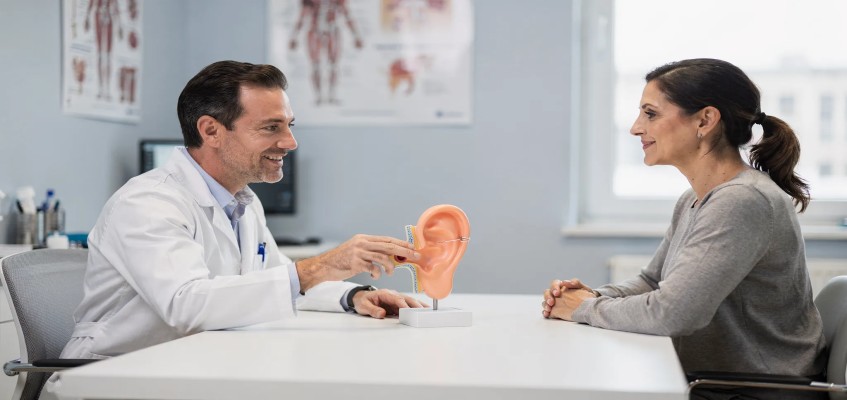
Cortical mastoidectomy is a surgery that removes infected or diseased air cells inside the bone behind your ear. It helps the ear heal by clearing trapped infection and improving drainage.
If you have ongoing ear discharge, repeated infections or a condition like cholesteatoma, medicines alone may not be enough. This article explains what cortical mastoidectomy involves, when ENT specialists recommend it and how it protects hearing and overall ear health.
You will also learn how the procedure connects with other middle ear surgeries, what recovery usually looks like and which warning signs should prompt urgent ENT review.
Cortical mastoidectomy and why the mastoid matters
The mastoid is the part of the skull bone located behind the ear. It contains small air spaces that connect with the middle ear. In a healthy ear, this area supports ventilation and pressure balance.
When infection persists or abnormal skin growth spreads into these spaces, the mastoid can become a reservoir for disease. In that situation, cortical mastoidectomy can remove the diseased air cells while preserving critical structures.
In simple terms, cortical mastoidectomy is often done to:
-
Clear chronic infection that keeps coming back
-
Remove diseased tissue and improve ear drainage
-
Create a safe environment for middle ear repair procedures
What exactly is done during cortical mastoidectomy?
During cortical mastoidectomy, the surgeon accesses the mastoid through an incision behind the ear. Using a microscope and fine drills, the diseased mastoid air cells are opened and removed.
The aim is not cosmetic. The aim is disease control and creating long term ear stability.
Depending on the underlying cause, the surgeon may also perform additional middle ear steps in the same sitting, such as tympanoplasty (eardrum repair) or ossicular reconstruction if the hearing bones are affected.
When is cortical mastoidectomy recommended?
Your ENT doctor considers cortical mastoidectomy when there is evidence that the mastoid is involved in a disease process or when middle ear disease is unlikely to resolve without addressing the mastoid.
Is it for chronic ear infection?
Yes. Cortical mastoidectomy is commonly considered in chronic ear infection when there is persistent discharge despite appropriate medical care or when imaging suggests mastoid disease.
If you are dealing with recurring ear infection symptoms, you can also read about evaluation and care pathways with a specialist at Ascent Hospital through their page on the Best Doctor for Ear Infection in Kerala.
Is it used for cholesteatoma?
Cholesteatoma is an abnormal skin growth in the middle ear that can expand and damage nearby structures. When it extends toward the mastoid, surgery becomes essential to prevent complications.
For a patient friendly overview of disease progression and hearing impact, see Ascent’s article on the spread of cholesteatoma.
What about middle ear atelectasis?
Middle ear atelectasis refers to significant retraction or collapse of the eardrum due to long standing pressure imbalance and poor ventilation. Over time, retraction pockets can trap skin debris, increase infection risk and sometimes progress toward cholesteatoma.
Cortical mastoidectomy is not the first answer for every case of middle ear atelectasis. However, when atelectasis is associated with chronic infection, unsafe retraction pockets or persistent disease, your surgeon may recommend cortical mastoidectomy as part of a broader plan to stabilise ventilation and create a safer ear.
How cortical mastoidectomy improves ear health
A successful cortical mastoidectomy is not just about removing diseased bone spaces. It can make a practical difference in day to day ear health.
Reduced recurrence of infection and discharge
Chronic infection can persist when bacteria and inflamed tissue remain hidden in mastoid air cells. By clearing this diseased area, cortical mastoidectomy reduces the chance that symptoms keep returning.
Lower risk of complications
Untreated mastoid and middle ear disease can lead to serious complications involving nearby structures. Early surgical control helps reduce the risk of disease spreading deeper.
Better conditions for hearing repair
Hearing improvement depends on the status of the eardrum and the tiny middle ear bones. Cortical mastoidectomy can be combined with eardrum repair and hearing reconstruction to restore a cleaner and more stable middle ear environment.
If your surgeon discusses ossicular reconstruction, you may want to consult a team experienced in advanced ear surgery. Ascent Hospital highlights services for complex hearing restoration, including access to a Best Ossiculoplasty Surgeon in Kerala.
Cortical mastoidectomy vs related ear surgeries
Patients often hear multiple procedure names in one consultation. The key difference is the target area.
| Procedure | Main area treated | Common goal | When it may be combined |
|---|---|---|---|
| Cortical mastoidectomy | Mastoid air cells behind the ear | Remove infection or disease reservoir | Often paired with tympanoplasty in chronic ear disease |
| Tympanoplasty | Eardrum and middle ear | Close perforation, improve hearing, stop discharge | Frequently done with cortical mastoidectomy if mastoid is involved |
| Ossiculoplasty | Middle ear bones (ossicles) | Restore sound conduction | May be done along with tympanoplasty with or without cortical mastoidectomy |
If your plan includes eardrum repair, consider discussing your options with a best tympanoplasty surgeon in Kerala based on your hearing test and imaging findings.
What to expect before surgery
Before cortical mastoidectomy, your ENT team usually performs:
-
Detailed ear examination under microscope
-
Hearing tests (audiology)
-
Imaging when needed, commonly CT of temporal bone
-
Review of infection control steps and medication history
If there is active discharge, your doctor may treat infection first to improve surgical conditions.
Choosing the right centre matters for both safety and outcomes. Ascent ENT Hospital is known as a best ENT Hospital in Kerala with specialty ENT care and advanced diagnostic support. You can explore services at the official Ascent Hospital website.
Recovery and aftercare
Recovery after cortical mastoidectomy varies depending on whether other procedures were done in the same surgery.
Many patients can expect:
-
A dressing around the ear for a short period
-
Mild to moderate pain controlled with prescribed medicines
-
Temporary fullness or reduced hearing while packing is in place
-
Follow up visits for wound check and ear cleaning
Water precautions are usually advised until your surgeon confirms healing.
What symptoms after surgery need urgent review?
Seek urgent medical attention if you have severe dizziness, facial weakness, high fever or worsening pain with swelling and redness around the ear. These symptoms are uncommon but should be assessed promptly.
Ascent Hospital provides ENT specialty care and has emergency support pathways. If you need an ENT clinic in Kerala for evaluation, you can start with their ENT clinic in Kerala page.
Is cortical mastoidectomy safe?
Cortical mastoidectomy is a well established ENT operation when performed by trained specialists with proper operating microscope support.
All surgeries carry risks. Your surgeon will explain risks based on your ear condition and scan findings. Commonly discussed risks include bleeding, infection, taste disturbance, persistent perforation or the need for further surgery if disease is extensive.
The most important safety factor is accurate diagnosis and choosing the right procedure for the right indication. That is why specialist evaluation is essential, especially for cholesteatoma and chronic draining ears.
Choosing the right ENT team in Kerala
If your doctor has recommended cortical mastoidectomy, it usually means there is a clear reason to control disease and protect long term ear function.
Ascent ENT Hospital Kerala is Kerala’s first ISO and NABH accredited ENT specialty hospital and is the dream project of Dr. Sharafudheen P.K. Patients visit Ascent for comprehensive ear nose and throat care, advanced ENT technology and expert ENT surgeons.
You can learn more about the team and services at Ascent’s Best ENT Clinic page and connect with a Best ENT surgeon in Kerala for a personalized plan.
Conclusion
Cortical mastoidectomy is a focused surgery to remove diseased mastoid air cells behind the ear and help stop persistent infection. It can reduce recurrent discharge, support safer healing and create better conditions for hearing repair procedures like tympanoplasty or ossiculoplasty.
It is also relevant in advanced chronic ear disease where conditions such as cholesteatoma or selected cases of middle ear atelectasis threaten long term ear health.
If you have ongoing ear discharge, repeated ear infections or hearing loss and your ENT has mentioned cortical mastoidectomy, schedule a specialist consultation to understand your options. Book an appointment or contact the team at Ascent Hospital to plan the next steps with a best ENT Hospital in Kerala, India | ASCENT HOSPITAL.
Share

Our Professionals
 (1) (2).png)
Dr. Sharafudheen. P.K
Chief Consultant ENT & Cochlear Implant Surgeon
MBBS, MS (ENT), DORL DOHNS - RCS Ed (UK)
 (2).jpg)
Dr. Anuradha Varma. M.R
Senior Consultant ENT, Head & Neck Surgeon
MBBS, DLO
.jpeg)
Dr. Bijiraj Vathwam Veettil
Senior Consultant ENT Head & Neck, Sleep Surgeon
MBBS, MS (ENT), Fellowship in Snoring and Sleep apnea Surgeries (Singapore), Fellowship in sinus and skull base surgery
.png)
Dr. Prasanth Parameswaran
Senior Consultant ENT, Head & Neck Surgeon
MBBS, DLO, DNB (ENT), MNAMS, AASC (Specialist - Allergy and Immunotherapy), Fellowship in Snoring and Sleep apnea Surgeries (Singapore).

Dr. Arshad M Razi
Consultant ENT, Head & Neck Surgeon
MBBS, MS (ENT), Fellow in Head & Neck Surgical Oncology
Dr. Deepthi. N.V
Senior Consultant ENT, Head & Neck Surgeon
MBBS, DNB (ENT)

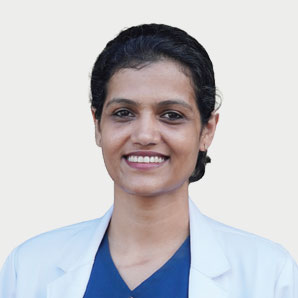
Dr. K Shilpa Nair
ENT Surgeon | Cochlear Implant & Sleep Surgery Specialist
MBBS, MS, DNB, MRCS(Eng), Post doctoral Fellowship in Implantation Otology


Dr. Nibi Shajahan
Consultant ENT, Head & Neck Surgeon
MBBS, MS (ENT), Fellowship in Snoring and Sleep apnea Surgeries (Singapore). Trained in Allergy and Immunotherapy




Dr.Anand Krishnan
Consultant ENT, Head and Neck Surgeon
MBBS ,DLO ,DNB ENT ,MRCS (ENGLAND)




Dr. Seshadri Ganesh. A.L
Senior Consultant Anaesthesiologist
MBBS, DCH, MD, DIP.N.B




Mr. Prasanth. N.P
Senior Audiologist & Speech Language Pathologist
BASLP, MASLP, MSc (Psy)

Ms. Chinju Johny
Audiologist & Speech Language Pathologist
BASLP, MSc (Audiology)



Our Patient Stories
View All Testimonials