Blogs
Adhesive Otitis Media: What Is It and How Is It Treated?
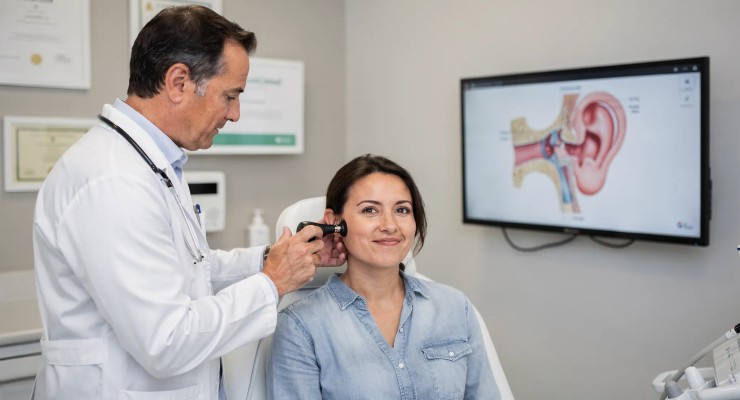
Adhesive otitis media is a long standing ear problem in which the ear drum gets stuck to the structures behind it. In adhesive otitis media the normal air space in the middle ear disappears because the ear drum is pulled inward and becomes adherent.
It usually follows Eustachian tube dysfunction after repeated ear infections or unresolved glue ear. The outcome can be muffled hearing persistent ear fullness and sometimes recurring discharge. This article explains what causes adhesive otitis media, how ENT doctors diagnose it and the treatments that protect hearing for both children and adults.
At Ascent Hospital, regarded by many patients as the best ENT Hospital in Kerala, you get comprehensive ear care backed by ISO and NABH accreditation. With dedicated ear services at Ascent Hospital Palakkad and Ascent Hospital Calicut, our team evaluates complex middle ear disease early so you avoid long term complications.
Understanding Adhesive Otitis Media
What is happening inside the ear
When the Eustachian tube does not equalise pressure the middle ear develops a vacuum. Over time the ear drum is drawn inward and can touch the ossicles or the inner wall of the middle ear. This is the core problem in adhesive otitis media and it reduces the ability of the ear drum to vibrate which causes conductive hearing loss. Long standing retraction can damage the ossicles, invite infections and rarely lead to cholesteatoma.
What causes adhesive otitis media
Adhesive disease usually develops after many months of pressure problems or persistent fluid. Common drivers include:
-
Repeated colds or ear infections in childhood
-
Allergic rhinitis or chronic sinusitis that blocks the Eustachian tube
-
Enlarged adenoids in children
-
Cleft palate anatomy
-
Smoking exposure in the home
-
Poorly treated glue ear
If you are choosing where to be assessed use this practical guide to find the best ear nose and throat clinic. You can also visit our best ENT Clinic pages to learn what to expect during an ear evaluation at Ascent ENT Hospital Kerala.
Symptoms to watch for
Most people notice a slow change rather than sudden pain. Typical features are:
-
Muffled or fluctuating hearing on one side or both
-
Ear fullness and pressure
-
Occasional ringing noises
-
Recurrent ear discharge after colds
-
Balance discomfort especially during flights
If you suspect infection, book a visit with the best Doctor for Ear Infection in Kerala. For ongoing hearing concerns connect with the best Doctor For Hearing Loss for a timely audiology work up.
How ENT doctors diagnose adhesive otitis media
Diagnosis is clinical and test based. At Ascent ENT Hospital Kerala your ENT doctor may advise:
-
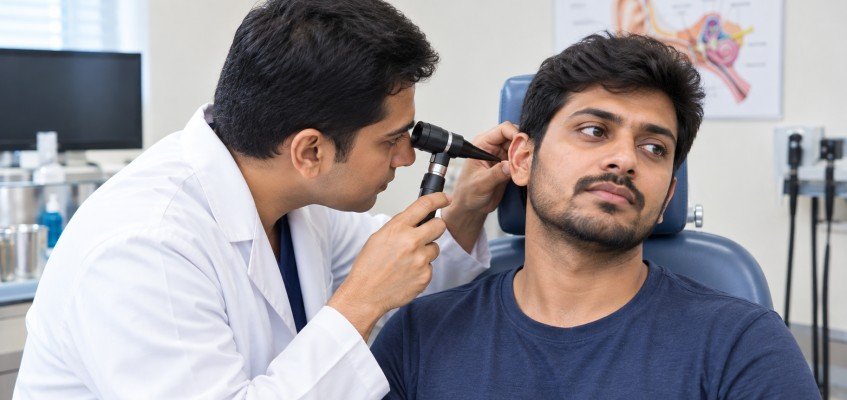
Otoscopic exam to look for a thin retracted or immobile ear drum
-
Tympanometry to confirm negative pressure or reduced mobility
-
Pure tone audiometry to measure conductive hearing loss
-
Nasal endoscopy to assess the Eustachian tube and adenoids
-
CT scan when complications like cholesteatoma are suspected
Clinical grading helps plan care. A severely retracted ear drum that touches the ossicles is more likely to need surgical correction.
Treatment options for adhesive otitis media
The aim is to restore ventilation, protect the ear drum and preserve hearing. Treatment is tailored to the stage of disease.
Non surgical management
-
Treat nasal allergy and sinus disease with guided therapy
-
Autoinflation techniques in suitable patients to promote middle ear air entry
-
Watchful waiting with periodic checks when hearing is normal and the ear drum is safe
-
Hearing aids for stable conductive loss when surgery is not preferred
For medical decision making consult an ENT Doctor who can personalise the plan rather than relying on home remedies.
Surgical management
-
Ventilation tube insertion when persistent negative pressure is the main driver and the ear drum is not fixed to bone
-
Cartilage tympanoplasty to re-expand and support a thinned adherent ear drum. If you are exploring surgery ask for the best tympanoplasty surgeon in kerala
-
Ossiculoplasty to repair or reconstruct damaged hearing bones when needed. To discuss options with the best ossiculoplasty surgeon in kerala book a surgical consult
-
Mastoid exploration if cholesteatoma or hidden pockets are found
For complex ear reconstruction you can rely on the Best ear surgeon in kerala and the best ENT surgeon in kerala at Ascent Hospital.
Hearing rehabilitation
Most patients improve after surgery. If hearing remains limited or if there is mixed hearing loss your ENT may offer advanced hearing solutions. As a recognised Cochlear implantation hospital kerala we also manage severe inner ear hearing loss when indicated. You can meet the Best cochlear implant surgeon in India or the Best Cochlear implant specialist in Kerala at our centre for a comprehensive candidacy evaluation.
Staging and typical management at a glance
| Stage of ear drum retraction | What the doctor sees | Common hearing impact | Usual first steps |
|---|---|---|---|
| Mild retraction | Ear drum slightly pulled inward but not stuck | Often normal or mild loss | Treat nasal issues, autoinflation, close follow up |
| Moderate retraction | Deep pocket forming but not adherent | Mild to moderate conductive loss | Consider grommet, allergy control, regular surveillance |
| Adhesive stage | Ear drum adherent to ossicles or promontory | Moderate conductive loss sometimes mixed loss | Cartilage tympanoplasty, possible ossiculoplasty, hearing rehab |
| Complicated stage | Suspicion of cholesteatoma or ossicular erosion | Variable sometimes progressive | Imaging, mastoid surgery, staged reconstruction |
Children vs adults
Children are more prone because of small Eustachian tubes and adenoid issues while adults often have nasal allergy or sinus disease. The goals are the same in both groups, keep the ear safe and preserve hearing.
Possible complications if ignored
-
Progressive hearing loss affecting school or work performance
-
Recurrent infections with discharge
-
Ossicular erosion
-
Cholesteatoma that can damage bone and require major surgery
Seek care promptly at an ENT clinic in Kerala if you notice worsening fullness or discharge. For specialised middle ear surgery Ascent also provides stapes procedures led by the best Stapedectomy surgeon in India. If you are comparing options within the state you can also review the best Stapedectomy surgeon in kerala credentials during your visit.
Why choose Ascent Hospital for ear care
As Kerala’s first ISO and NABH accredited ENT specialty hospital Ascent offers:
-
Expert ENT surgeons with focused ear surgery experience
-
Advanced diagnostic imaging, audiology and endoscopy under one roof
-
Day care ear surgeries with enhanced recovery protocols
-
A balance and vertigo clinic along with digital hearing aid fitting
-
24hrs emergency ENT support
Wherever you are in North Kerala you can access the same standards at Ascent Hospital Palakkad or Ascent Hospital Calicut. If you want a quick overview of how to choose a care centre read our guide to find the best ear nose and throat clinic before you book.
Summary and next steps
Adhesive otitis media develops when long standing pressure problems pull the ear drum inward until it sticks to middle ear structures. Early diagnosis protects hearing and avoids complications. Treatment ranges from medical therapy and tubes to cartilage tympanoplasty with or without ossiculoplasty, with hearing rehabilitation as needed. If you or your child has ear fullness reduced hearing or recurrent discharge do not wait.
For a personalised evaluation at the best ENT Hospital in Kerala contact our team today. Book your appointment now through the Ascent care line or contact Ascent Hospital to get started.
Frequently Asked Questions
Is adhesive otitis media the same as glue ear?
Glue ear refers to persistent fluid in the middle ear while adhesive otitis media is the advanced stage where the ear drum sticks to structures because of long standing pressure problems.
Can adhesive otitis media get better on its own?
Mild retractions may stabilise but once the ear drum becomes adherent spontaneous reversal is uncommon and specialist care is advised.
Is surgery always required?
No. Management depends on stage symptoms and hearing test results. Some patients do well with medical therapy and monitoring while others benefit from tympanoplasty or ossiculoplasty.
Will a ventilation tube help?
Tubes can help when pressure imbalance is the main issue and the ear drum is not fixed. In adhesive stages structural repair may be more effective.
How long is recovery after ear surgery?
Most day care procedures allow home discharge the same day with graded return to routine activities over one to two weeks. Your surgeon will confirm timelines for your case.
Share
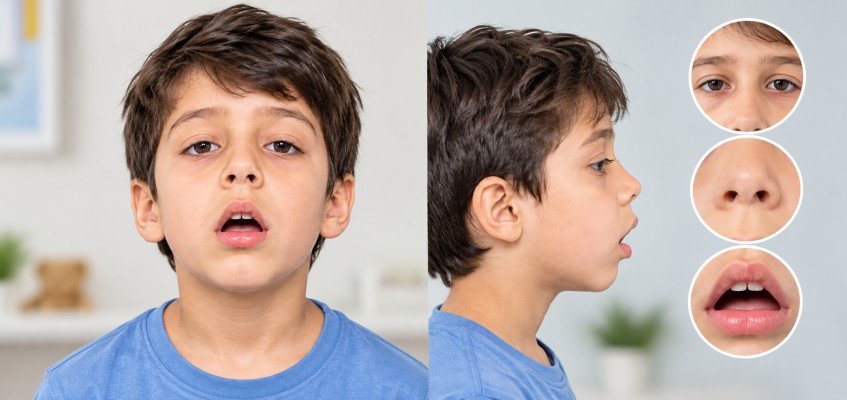
Our Professionals
 (1) (2).png)
Dr. Sharafudheen. P.K
Chief Consultant ENT & Cochlear Implant Surgeon
MBBS, MS (ENT), DORL DOHNS - RCS Ed (UK)
 (2).jpg)
Dr. Anuradha Varma. M.R
Senior Consultant ENT, Head & Neck Surgeon
MBBS, DLO
.jpeg)
Dr. Bijiraj Vathwam Veettil
Senior Consultant ENT Head & Neck, Sleep Surgeon
MBBS, MS (ENT), Fellowship in Snoring and Sleep apnea Surgeries (Singapore), Fellowship in sinus and skull base surgery
.png)
Dr. Prasanth Parameswaran
Senior Consultant ENT, Head & Neck Surgeon
MBBS, DLO, DNB (ENT), MNAMS, AASC (Specialist - Allergy and Immunotherapy), Fellowship in Snoring and Sleep apnea Surgeries (Singapore).
Dr. Arshad M Razi
Consultant ENT, Head & Neck Surgeon
MBBS, MS (ENT), Fellow in Head & Neck Surgical Oncology
Dr. Deepthi. N.V
Senior Consultant ENT, Head & Neck Surgeon
MBBS, DNB (ENT)

Dr. K Shilpa Nair
ENT Surgeon | Cochlear Implant & Sleep Surgery Specialist
MBBS, MS, DNB, MRCS(Eng), Post doctoral Fellowship in Implantation Otology

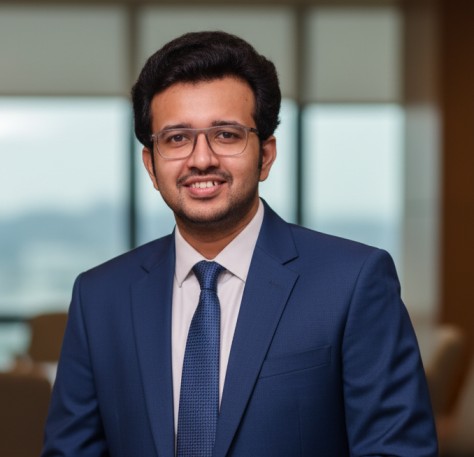
Dr. Nibi Shajahan
Consultant ENT, Head & Neck Surgeon
MBBS, MS (ENT), Fellowship in Snoring and Sleep apnea Surgeries (Singapore). Trained in Allergy and Immunotherapy




Dr.Anand Krishnan
Consultant ENT, Head and Neck Surgeon
MBBS ,DLO ,DNB ENT ,MRCS (ENGLAND)
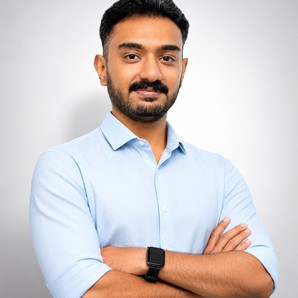

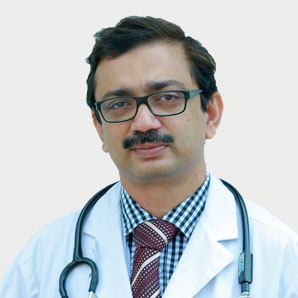
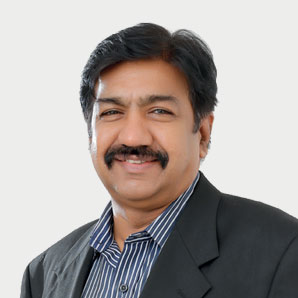
Dr. Seshadri Ganesh. A.L
Senior Consultant Anaesthesiologist
MBBS, DCH, MD, DIP.N.B

Mr. Prasanth. N.P
Senior Audiologist & Speech Language Pathologist
BASLP, MASLP, MSc (Psy)

Ms. Chinju Johny
Audiologist & Speech Language Pathologist
BASLP, MSc (Audiology)



Our Patient Stories
View All Testimonials